

Most horses on decent hay and pasture get close to balanced nutrition, but “close” leaves room for dull coats, brittle hooves, and low energy that shows up in the saddle. The right multivitamin or targeted supplement closes those gaps without a feed-room overhaul. This roundup covers seven options that handle everything from hoof quality to joint support, so you can match the product to what your horse actually needs rather than guessing.
A Quick View Of The Lineup

Durvet BIOTIN Daily Hoof Supplement, 10 Pound

Kentucky Performance Prod Elevate Maintenance Powder, 2 lb

Manna Pro Sho-Glo Vitamin & Mineral Supplement, 5 Pounds

Horse Health Joint Combo Hoof & Coat, 64 Day Supply

Horse Health Red Cell Vitamin-Iron-Mineral, 32 oz

AniMed Horse Glucosamine 5000 Supplement, 16 oz
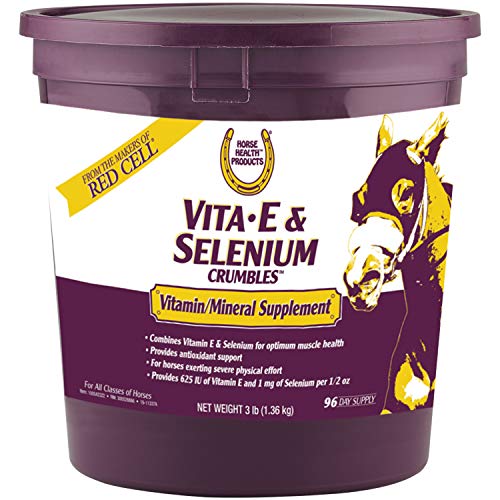
Horse Health Vita E & Selenium Crumbles, 3 lb
Taking A Closer Look At The Options
A ten-pound tub of apple-flavored pellets is the kind of purchase that quietly earns its keep over a farrier cycle. Durvet built this one around a concentrated biotin level of 320 mg per pound, which translates to real hoof-wall support when fed daily through a trim-to-trim schedule.
The formula goes beyond biotin, though. Flax seed meal contributes amino acids and minerals tied to hoof growth, while Yea-Sacc supports digestive balance so nutrients actually get absorbed. Owners of thin-soled horses commonly report this style of program pairs well with consistent farrier visits.
The Case For It
- High biotin concentration targets hoof wall quality directly
- Apple flavor means most horses clean up their ration without sorting
- Flax meal adds amino acids that support new horn growth
- Digestive support helps the horse use what you’re paying for
- Ten pounds stretches a long way at maintenance serving sizes
Small Caveats
- Hoof results take months, not weeks, so patience matters
- Store the tub sealed and dry; pellets can draw moisture in humid barns
Key Specs
Who It Suits Best
Owners fighting chronic cracking, chipping, or slow hoof growth who want a single-purpose supplement they can commit to for a full season.
Where A Sibling Pick Shines
Horse Health Joint Combo Hoof & Coat makes more sense for riders who also want joint ingredients like glucosamine and MSM in the same bucket.
Where the Durvet pick stacks several ingredients, Elevate does the opposite: it delivers one thing, natural vitamin E, in a highly absorbable powder. Horses without access to fresh grass often run short on this nutrient, since vitamin E degrades quickly once forage is cut and cured.
The single-ingredient approach has a practical upside worth understanding. Because nothing else is in the bucket, you can raise or lower the serving to match a horse’s needs without accidentally tipping other minerals out of balance. That flexibility is why many barns keep a tub on hand year-round.
Well-Handled Touches
- Natural-source vitamin E absorbs more readily than synthetic forms
- No competing vitamins or minerals, so dosing stays flexible
- Powder mixes cleanly into grain for fussy eaters
- Two-pound size suits trial runs before committing to bulk
Things That May Matter
- Covers vitamin E only; pair it with a broad balancer for full coverage
- Natural vitamin E oxidizes over time, so buy quantities you’ll finish promptly
The Right Fit
Horses on dry lots or stored hay, plus owners managing specific vitamin E requirements under veterinary guidance.
Swap It Out When
Manna Pro Sho-Glo fits better if you want a complete vitamin and mineral profile instead of a single-nutrient tool.
Sho-Glo plays the role Elevate deliberately avoids: a complete vitamin and mineral base designed to round out whatever feed program you already run. Manna Pro positions it as a top-dress that upgrades the nutritional value of ordinary grain, which suits barns feeding plain oats or basic rations.
The coat angle is the headline benefit here. Vitamins and minerals working together support skin condition and shine, and added antioxidants back up immune function. For a horse coming off winter looking rough around the edges, this is the kind of baseline product many owners start with before adding anything specialized.
What Makes Sense
- Covers the full vitamin and mineral spectrum in one scoop
- Antioxidants support immune health alongside coat condition
- Highly palatable, so picky eaters rarely leave it behind
- Five pounds works as an affordable entry point to supplementation
Points To Note
- Not a fix for a single severe deficiency; it’s a balancer, not a booster
- Check your fortified feeds first to avoid doubling up on overlapping nutrients
- Keep the container closed tight between feedings to preserve freshness
Feature Snapshot
Made For
Owners of pleasure horses on simple rations who want dependable all-around nutritional insurance without juggling multiple buckets.
Reach For A Different Pick When
AniMed Horse Glucosamine 5000 serves targeted joint support better, since Sho-Glo isn’t built around cartilage ingredients.
Joints, hooves, and coat usually mean three separate purchases. This bucket collapses them into one two-ounce daily serving, combining glucosamine and chondroitin for cartilage support, MSM and vitamin C for connective tissue, plus 16 mg of biotin per serving for hoof integrity.
Add lysine, zinc, and omega-3 and omega-6 fatty acids, and the ingredient list reads like a well-planned program rather than a compromise. Riders bringing an older horse back into regular work are the obvious fit; the 64-day supply also gives you a realistic window to judge whether the combination agrees with your horse.
Practical Pluses
- Three popular supplement categories consolidated into one scoop
- Glucosamine and chondroitin back normal joint function and collagen synthesis
- Biotin dose supports strong hooves alongside the joint work
- Fatty acids help maintain skin and a lustrous coat
- Bucket format keeps a multi-month supply organized in one place
Where It May Fall Short
- Fixed ratios mean less control than buying each ingredient separately
- Two ounces daily burns through the bucket faster than single-focus products
- Horses with specific sensitivities may need to rule out individual components
At A Glance
Whose Shelf It Belongs On
Performance and senior-horse owners who want joint, hoof, and coat support handled by a single daily serving instead of a shelf of tubs.
Consider Something Else When
Durvet BIOTIN Daily suits hoof-only concerns better, delivering far higher biotin concentration without joint ingredients diluting the focus.
Red Cell has been a staple name in tack rooms for decades, and the format explains why: a liquid that pours over feed and coats every bite, useful for horses that sift powders straight to the bottom of the bucket. The 32-ounce bottle covers roughly sixteen days at standard serving rates.
The blend leans on iron and zinc for immune support plus B-complex vitamins for metabolism, filling shortfalls that show up in young stock, broodmares, seniors, and horses bouncing back from illness. Compared with the crumbly Vita E product later in this list, Red Cell casts a wider net across the whole micronutrient range.
What Stands Out
- Liquid form clings to feed, reducing sorting behavior
- Iron and zinc contribute to immune system support
- B-complex vitamins back everyday metabolic function
- Broad vitamin and mineral profile fits varied situations
Honest Caveats
- Liquid bottles need shaking and can be messy around the feed room
- Iron content calls for measured servings rather than free pouring
- Shorter supply window than pelleted alternatives at similar spend
Quick Facts
Right Fit For
Senior horses, hard keepers, and animals recovering from stress whose diets need a broad micronutrient lift in an easy-to-swallow format.
Another Choice May Suit
Kentucky Performance Prod Elevate is the cleaner option when your horse’s gap is specifically vitamin E rather than general mineral coverage.
Glucosamine is the amino sugar that forms part of cartilage structure, and AniMed’s version skips the filler entirely: one jar, one job. The compact 16-ounce size stores easily and travels well to shows, which matters more than it sounds when your tack room is already crowded.
This is the minimalist’s joint supplement. There’s no MSM riding along and no coat additives, so it slots into a program that already handles other bases, or stands alone for horses whose only complaint is stiffness after hard work. Made in the United States, it’s a straightforward choice for owners who read labels and like short ones.
Reasons It Performs
- Single-ingredient focus keeps dosing simple and predictable
- Compact jar fits small feed rooms and show trunks alike
- Blends into existing rations without palatability battles for most horses
Points To Keep In Mind
- No complementary ingredients like MSM or chondroitin for broader joint coverage
- You’ll still need a separate vitamin-mineral base for overall balance
Best Suited To
Owners running a targeted joint plan for an otherwise well-balanced diet, or anyone stacking glucosamine onto an existing supplement routine.
Not Your Match When
Horse Health Joint Combo Hoof & Coat covers joints, hooves, and coat together, making it the better value for horses needing all three.
Vitamin E and selenium work as a team inside muscle cells, mopping up free radicals generated during intense training. This crumble delivers both in precise amounts: 625 IU of vitamin E and 1 mg of selenium per half-ounce serving, a pairing that matters most for horses in serious work or recovery.
The crumble format deserves credit too. Unlike fine powders that settle to the bucket floor, these pieces mix into grain and stay mixed, which keeps daily intake consistent. Selenium regions vary widely across the country, though, so confirm your local levels before adding more.
Practical Advantages
- Balanced E and selenium ratio protects muscle and nerve cells under training load
- Crumbles resist sorting, ensuring consistent intake day after day
- 96-day supply per three-pound tub keeps costs predictable
- Suits performance horses, broodmares, seniors, and post-work recovery
Details To Watch
- Selenium is regulated; total dietary intake should be checked against local forage levels
- Half-ounce servings require accurate measuring to stay within safe limits
Core Details
Who Will Love This
Riders keeping performance horses, breeding mares, or seniors in peak muscular condition through a structured antioxidant program.
Look Elsewhere When
Horse Health Red Cell offers broader iron and mineral support for debilitated horses where selenium precision isn’t the priority.
What Matters Most Before Choosing Multivitamins For Horses
Start With The Diet You Already Feed
Audit the ration first. Fortified complete feeds already carry vitamins and minerals, and stacking a supplement on top risks overlap, especially with minerals like selenium that have narrow safety margins. Horses on plain oats or grass hay alone have the clearest case for a balancer such as Sho-Glo.
Match The Product To The Actual Problem
A dull coat points toward a broad multivitamin, while crumbling hooves justify a biotin-heavy option like the Durvet pellet. Stiffness after work calls for joint ingredients. Buying a kitchen-sink formula for a single issue wastes money and complicates troubleshooting when something changes.
Format Affects Compliance
The best formula fails if your horse refuses it. Liquids coat feed for sifting eaters, crumbles resist sorting, and flavored pellets disappear fastest. Consider how much measuring accuracy each format demands, particularly with selenium-containing products.
Give Any Program Time To Show Results
Hoof and coat improvements track growth cycles, meaning months rather than weeks. Commit to at least one full farrier interval before judging a hoof product, and keep notes on condition changes so you can separate real progress from seasonal variation.
Key Considerations Across These Picks
Traps First Timers Fall Into
Doubling up is the classic error: a fortified feed plus a complete balancer plus a hoof product can push certain minerals past sensible levels. Another common slip is judging a supplement in two weeks. Read labels against your current feed before adding anything new.
What Separates Premium From Basic
Higher-tier formulas concentrate active ingredients, use better-absorbed nutrient forms like natural vitamin E, and add supportive compounds such as Yea-Sacc or flax meal. That precision costs more per container but often stretches further per serving, rewarding owners committed to a specific goal.
Frequently Asked Questions
Do all horses need a multivitamin?
No. Horses on good forage plus a fortified complete feed often meet their needs without extras. Supplementation makes sense when bloodwork, coat condition, or hoof quality suggests a gap.
How long until I see results?
Coat changes typically appear within six to eight weeks. Hoof improvements follow the growth cycle, so expect three to six months of consistent feeding.
Can I combine several of these products?
Yes, but check for overlapping ingredients first, especially selenium and iron. Many owners pair a broad balancer with one targeted supplement successfully.
Is liquid better than powder?
Neither is universally superior. Liquids suit horses that sort powders, while powders and pellets store longer and measure precisely. Palatability decides most cases.
Should my vet approve my supplement plan?
It’s a smart step, particularly with selenium or iron products. A vet can also recommend bloodwork to confirm which gaps actually exist.
Bottom Line
Match the supplement to the gap, not the marketing. Broad balancers like Manna Pro Sho-Glo cover general shortfalls, while targeted picks such as the Durvet biotin pellets or the Vita E and selenium crumbles solve specific problems efficiently. Start with one product, feed it consistently for a fair stretch, and let your horse’s coat, hooves, and attitude tell you whether it’s working.
