

A new kitten eats a lot, and what goes in that bowl during the first year shapes bones, brain, and coat for life. The catch is that kitten nutrition labels read like chemistry exams, and most shoppers just want food that supports growth without fillers or guesswork. This roundup sorts eight natural options, wet and dry, into clear profiles so you can match one to your kitten’s age, appetite, and your budget. Every entry here leans on meat-first recipes and growth-specific nutrients like DHA and taurine rather than marketing fluff.
A Snapshot Of The Selections
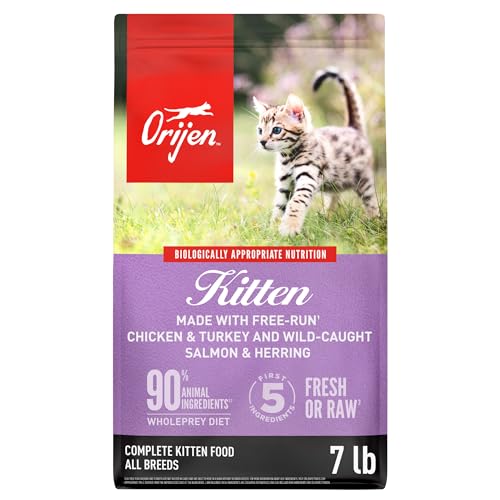
ORIJEN Grain Free WHOLEPREY Kitten Recipe Dry Food 7lb

Tiki Cat Baby Wet Kitten Food Shreds 2.4 oz (12 Count)

Wellness CORE Grain Free Kitten Dry Food Turkey & Chicken 5 lb

Weruva Kitten Fur Baby Favorites Variety Pack 3oz (12)

Blue Buffalo Baby BLUE Chicken Kitten Paté 3 oz (24 ct)

Stella & Chewy’s Raw Coated Cage-Free Chicken Kibble 2.5 lb

Wellness Complete Health Wholesome Grains Kitten Dry Food 5 lb

Purina Pro Plan Complete Essentials Kitten Chicken & Rice 3.5 lb
Inside Each Recommended Option
This is the meat-heavy option in the lineup, built around chicken paired with fish sources like salmon or tuna depending on the variant you choose. The whole-prey approach means ingredients echo what a cat would eat in nature, muscle meat along with organ and bone contributions, which is why the brand calls its formulas biologically appropriate.
In a busy household with a growing kitten burning energy all day, that density matters: smaller portions can deliver more of what growth demands. The trade-off shows up at checkout, since premium sourcing costs more per pound than mainstream kibble.
Strong Points
- Chicken-first recipe with fish variants, so you can rotate proteins without switching brands.
- Whole-prey formulation supplies nutrient variety that single-meat recipes often miss.
- Grain-free kibble suits kittens whose owners prefer to skip corn, wheat, and soy entirely.
- Nutrient density means a 7lb bag stretches further than the weight suggests.
Things To Consider
- The rich formula can be too intense for very young kittens still transitioning off wet food, so a gradual mix-in over a week or two helps.
- Cost per pound runs high, and owners commonly report needing to reseal the bag carefully to keep the fats from going stale.
Who It Suits Best
Committed owners who want maximum animal nutrition for a fast-growing kitten and don’t mind paying premium-kibble prices.
A Better Fit Elsewhere
Shoppers wanting similar grain-free protein at a gentler price will find the Wellness CORE turkey and chicken recipe below an easier fit.
Where the ORIJEN bag targets committed carnivore feeding, this variety pack solves a different problem: kittens eight weeks and older who need soft, moisture-rich meals while they wean. Each 2.4oz can holds shredded meat in four rotating recipes, chicken with salmon, tuna and liver, duck and liver, or egg, so a fussy eater gets novelty without a new shopping trip.
The growth support here is unusually complete for a small can. DHA feeds brain and vision development, added taurine plus balanced calcium and phosphorus back skeletal growth, and prebiotics ease digestion in guts still learning their job.
Notable Upsides
- Four recipes in one pack lets you discover your kitten’s preferences cheaply before committing to a case.
- DHA, taurine, and balanced minerals cover the core growth checkpoints in every serving.
- No grains, fruit, vegetables, carrageenan, or artificial additives keeps the ingredient list short and readable.
- Non-GMO sourcing appeals to owners reading labels closely.
- Soft shreds suit tiny teeth better than dry kibble during the weaning window.
Small Caveats
- Once opened, leftovers need refrigeration and should be used within a couple of days, which adds routine to daily feeding.
- Twelve cans vanish quickly with a hungry kitten, so multi-pack buyers may find themselves reordering often.
Quick Facts
Made For
Homes with newly adopted kittens around two months old who want complete wet nutrition from day one.
Where A Sibling Pick Shines
Owners preferring a smooth paté texture over shreds will get more mileage from the Blue Buffalo Baby BLUE option later in this list.
Fifty-five percent animal protein puts this kibble closer to ORIJEN’s territory than to grocery-store formulas, yet it lands at a friendlier price point. Turkey meal and chicken lead the recipe, with salmon oil supplying DHA for brain development, the same fatty acid category found in the Tiki Cat cans above but in crunchy form.
Day to day, this is the bag you leave out for free-feeding without worrying about empty calories. Controlled mineral levels support healthy hydration, and the omega blend from fish and flax tends to show up in coat condition within weeks, based on widely reported owner feedback.
The Good Stuff
- 55% animal protein delivers the meat density growing muscles demand.
- DHA from salmon oil supports cognitive and visual development through the first year.
- Formulated with input from veterinarians and nutritionists, not just marketers.
- Antioxidants, probiotics, vitamins, and minerals round out whole-body support including immunity and digestion.
Points To Note
- Kibble-only diets mean you’ll need to watch water intake, especially in warm apartments where cats already drink reluctantly.
- The 5lb bag suits single-kitten homes; multi-cat litters burn through it fast enough that the larger size makes more sense.
Feature Snapshot
Right Fit For
Owners who want near-premium protein levels in a convenient dry format for everyday feeding.
Swap It Out When
Kittens with sensitive stomachs often do better on the Wellness Complete Health wholesome-grains recipe reviewed below, which trades grain-free for gentler digestion.
Texture is the quiet dealbreaker in kitten food, and Weruva attacks it head-on with gravies, purées, and au jus formats alongside classic chunks. That range matters more than most first-time owners expect: a kitten that refuses gravy might inhale a hydrating purée, and this twelve-can pack lets you map those preferences without buying full cases of each.
Every recipe centers on chicken, some paired with pumpkin for digestive comfort or tuna for extra appeal. Like the Tiki Cat pack earlier, everything skips grain, gluten, carrageenan, and artificial flavors, keeping the label clean while supporting physical and mental development.
Bright Spots
- Multiple textures in one box solve picky-eater standoffs before they start.
- Hydrating purées add moisture, useful for kittens transitioning off milk replacer.
- Pumpkin formulas offer gentle fiber support for developing digestion.
- Free of grain, gluten, carrageenan, and artificial flavors across the whole pack.
Less Ideal Details
- Open cans spoil quickly at room temperature, so uneaten portions go in the fridge within hours.
- You may find the assortment skews heavily toward chicken, limiting rotation for kittens that tire of one protein.
Whose Shelf It Belongs On
Households battling a selective eater, or anyone weaning a litter with mixed texture preferences.
Reach For A Different Pick When
Consistency matters more than variety, the Blue Buffalo paté below gives you one reliable texture in a bigger 24-can supply.
Twenty-four cans of one straightforward chicken paté make this the easiest pick here to plan around. Real chicken leads the ingredient list, the high moisture content handles daily hydration, and the smooth texture works three ways: standalone meal, dry-food topper, or treat between feedings.
For someone raising a first kitten, that flexibility removes decision fatigue. There’s no texture roulette like the Weruva pack, no protein rotation to manage, just a consistent formula with no poultry by-product meals and no corn, wheat, or soy.
Practical Pluses
- High moisture content quietly covers hydration needs that dry-only diets miss.
- One recipe means predictable portions, predictable reactions, and simpler budgeting.
- Doubles as a topper, easing kittens onto new kibble without a standoff.
- Clean ingredient stance: no by-product meals, corn, wheat, or soy.
Worth Noting
- A single-flavor pack offers no escape hatch for kittens that decide they’re done with chicken.
- Paté dries out fast once opened, so covering and refrigerating leftovers becomes part of the routine.
Details At A Glance
Best Suited To
First-time kitten owners who want a simple, repeatable wet-feeding plan without variety-pack complexity.
Another Choice May Suit
Kittens bored by uniform texture will do better with the Weruva Fur Baby Favorites pack and its gravy-to-purée range.
Freeze-dried raw coating is the hook here: standard grain-free kibble dusted with raw chicken, delivering raw-style nutrition without freezer storage or handling raw meat yourself. For owners curious about raw diets but wary of the logistics, this sits comfortably in the middle ground, next to ORIJEN’s whole-prey philosophy but with a more tactile appeal cats tend to notice immediately.
Cage-free chicken anchors the recipe, and the whole-prey ingredient approach mirrors what the brand uses across its line. The honest caveat is economics: raw coating costs real money, and the 2.5lb starter bag disappears quickly once a kitten decides it’s delicious.
Notable Gains
- Freeze-dried raw coating adds palatability that plain kibble rarely matches.
- Cage-free chicken sourcing appeals to welfare-conscious shoppers.
- Whole-prey ingredients provide broad nutrient coverage without synthetic-heavy formulations.
- No refrigeration needed, unlike fully raw feeding routines.
Factors To Consider
- Per-pound cost sits at the top of this list, and the small bag size amplifies it for multi-kitten homes.
- The raw coating’s oils mean the bag needs a tight seal and cool storage to stay fresh, something owners commonly flag with coated kibbles.
Who Will Love This
Raw-curious owners who want the benefits without committing to full raw handling and freezer space.
Not Your Match When
Budget drives the decision, the Purina Pro Plan formula closing this list delivers solid growth nutrition at a fraction of the cost.
Think of this as the sibling to the Wellness CORE review above, same brand discipline, different philosophy on grains. Where CORE strips them out, Complete Health includes wholesome grains alongside turkey, turkey meal, and chicken, a combination many vets consider easier on developing digestive systems than grain-free alternatives.
The growth credentials hold up either way: added DHA for brain development, taurine for eye health, and guaranteed calcium and phosphorus levels backing skeletal structure. Owners report steady energy and healthy coats on this line, and the brand’s wider catalog means a smooth transition to adult formulas later.
What Works In Its Favor
- Guaranteed calcium and phosphorus levels directly support bone and muscle formation.
- DHA and taurine cover the two development milestones owners worry about most.
- Wholesome grains suit kittens with grain-free sensitivity or loose stools.
- Clear upgrade path within the same brand when adulthood arrives.
Some Limits To Know
- Grain inclusion rules it out for owners committed to ancestral-style, grain-free feeding.
- Like any dry diet, it won’t contribute much moisture, so a water fountain or wet topper helps.
Core Details
The Right Fit
Kittens with touchy stomachs, or owners whose vet has suggested moderate grain inclusion over grain-free formulas.
Consider Something Else When
Strict grain-free feeding is the goal, the Wellness CORE turkey and chicken recipe earlier in this list covers that lane.
Veterinarians recommend this line often, and the spec sheet explains why: real chicken first, DHA for brain and vision development, guaranteed live probiotics for digestion and immunity, and vitamin A plus taurine for eyesight. That’s the same core checklist the premium bags above carry, packaged in bite-sized kibble sized for small mouths.
Rice rounds out the formula, and there are no artificial colors or flavors. Compared with Stella & Chewy’s raw-coated option, you give up the raw coating and cage-free sourcing story, but keep nearly everything that actually drives growth, at a price that survives a long kittenhood.
The Upside
- Guaranteed live probiotics support digestive and immune health through the messy first year.
- DHA nourishes brain and vision development in every serving.
- Bite-sized crunchy pieces suit small jaws and encourage chewing.
- Omega-6 and vitamin A back skin and coat as the kitten coat transitions.
Points To Keep In Mind
- Chicken and rice includes grains, so it won’t satisfy strict grain-free households.
- The 3.5lb bag suits one kitten; faster eaters will move up to the larger sizes quickly.
Product At A Glance
Who Should Grab It
Budget-aware owners who still want vet-backed, probiotic-supported nutrition for a first-year kitten.
Look Elsewhere When
Maximum protein density is the priority, the ORIJEN whole-prey recipe at the top of this list goes further in that direction.
What Matters Most Before Choosing Natural Kitten Foods For Growth
Protein Comes First
Kittens are obligate carnivores, meaning their bodies are built to run on animal tissue rather than plants. Scan the label for a named meat, chicken, turkey, salmon, as the first ingredient, and treat vague terms like “meat by-products” as a reason to keep looking. Growing muscle simply doesn’t assemble itself from filler carbohydrates.
Growth Nutrients Do the Quiet Work
Three names matter most in the first year. DHA, an omega-3 fatty acid, supports brain and vision development. Taurine, an amino acid cats cannot synthesize adequately themselves, protects heart and eye function. Calcium and phosphorus, in balanced ratios, build the skeleton. Any formula worth your money lists these explicitly.
Match Texture to Age
Very young kittens under ten weeks struggle with hard kibble and do better on patés, purées, or soft shreds with high moisture. Older kittens handle crunch fine, and dry food earns its keep through convenience and dental exercise. Many households land on a wet-and-dry mix, which also sneaks extra hydration into the day.
Budget for the Long Game
A kitten eats through food fast, and the cheapest bag isn’t always the economical choice once you account for nutrient density. Richer formulas feed smaller portions per meal, so compare cost per serving rather than cost per pound before deciding what fits your monthly rhythm.
Key Considerations Across These Picks
Traps First Timers Fall Into
Switching foods overnight is the classic error, sudden changes commonly trigger stomach upset, so transition over seven to ten days by blending increasing amounts of the new formula. Another frequent misstep is buying adult cat food “to save money”; adult recipes lack the DHA, taurine, and mineral levels a growing body requires. Skipping the moisture question ranks third, since kibble-only diets leave hydration entirely up to a reluctant drinker.
What Separates Premium From Basic
Higher-tier formulas spend their extra cost on named, traceable proteins, whole-prey or raw components, and denser micronutrient profiles. That translates into smaller portions, less waste, and often visible differences in coat and energy within weeks. Paying up makes sense for fast-growing breeds or picky eaters; a solid mid-range option serves most single-kitten homes perfectly well.
Frequently Asked Questions
How long should a kitten stay on kitten food?
Most kittens need growth-formula nutrition until roughly twelve months of age. Larger breeds may benefit from extending that timeline, so confirm timing with your veterinarian at routine visits.
Can I mix wet and dry kitten food?
Yes, and many owners find it ideal. Wet food adds hydration and palatability while dry food offers convenience and between-meal grazing.
Is grain-free automatically better for kittens?
No. Unless your kitten has a diagnosed sensitivity, wholesome grains are digestible carbohydrate sources, and some grain-inclusive formulas are gentler on young digestive systems.
What is DHA and why does it appear in kitten food?
DHA is an omega-3 fatty acid concentrated in brain and retinal tissue. Kittens receive it through mother’s milk initially, and fortified foods continue that support after weaning.
How do I switch my kitten to a new food?
Blend the new formula into the old one gradually over a week or more, increasing the ratio every few days. Slow transitions help avoid digestive upset and refusal.
Closing Remarks
The right choice depends less on rankings and more on your kitten’s age, stomach, and your own routine. Weaning-age kittens thrive on the Tiki Cat or Blue Buffalo wet options, everyday dry feeding suits the Wellness pair or Purina Pro Plan, and premium seekers have ORIJEN and Stella & Chewy’s waiting. Start with one, transition slowly, and adjust as your kitten tells you what’s working.
