

Pacifiers spend hours in your baby’s mouth every day, so the material matters more than almost any other detail. A poorly chosen soother can leave skin marks, trap water in seams, or get rejected outright by a fussy newborn. This roundup focuses on eight well-made options built from medical-grade silicone or natural rubber latex, with no BPA and thoughtful shields that protect delicate cheeks. Whether you’re stocking the diaper bag for a newborn or replacing worn soothers for a teething six-month-old, there’s a fit here for your situation.
The Leading Options At A Glance

Dr. Brown’s Advantage One-Piece Silicone Pacifier 0-6m

Itzy Ritzy Natural Rubber Pacifiers 6-18 Mos, Set of 2

BIBS Boheme Soother 4-Pack Natural Rubber Latex

BIBS Pacifiers 0-6 Months 3-Pack Try-It Collection

FRIGG Moon Natural Rubber Baby Pacifier 0-6 Months 2-Pack

Ryan & Rose Cutie PAT Silicone Pacifier Teether Starter Kit

Philips Avent Ultra Soft Baby Pacifier 6-18 Months, 4-Pack
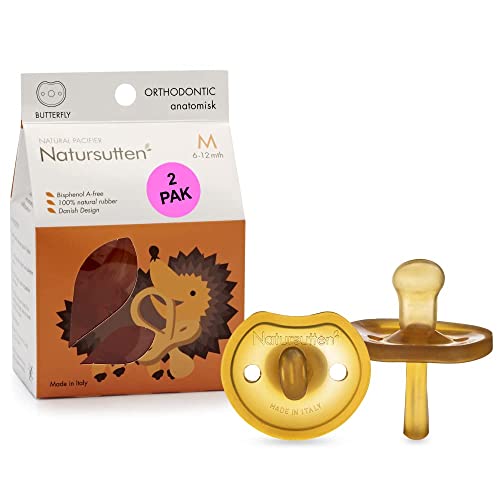
Natursutten Natural Rubber Pacifiers Butterfly Shield 6-12 Months
Why These Options Stand Out
Seams are where cheap pacifiers fail. Molded from a single piece of soft silicone, this Dr. Brown’s soother has nowhere for milk residue or bathwater to hide, which makes it one of the cleanest designs you can put in a newborn’s mouth at 3 a.m.
The fully symmetrical shape is reversible too, so it sits correctly no matter which way your baby grabs it. That sounds minor until you’re reinserting a dropped paci ten times a night. Stage One sizing suits the 0-6 month window, and the three-count pack gives you spares for the car seat and the crib.
Practical Advantages
- One-piece construction leaves no crevices for water or milk to collect
- Lightweight bulb stays comfortable during long naps
- Symmetrical, reversible form means it never goes in upside down
- Soft silicone is gentle on brand-new skin
Things To Consider
- Owners commonly report silicone picks like this need replacing sooner than natural rubber once heavy chewing starts
Key Specs
Who It Suits Best
Parents of newborns who want a low-maintenance, hygienic soother that survives constant washing without fuss.
Where Another Pick Suits Better
Once teething ramps up past six months, the Ryan & Rose Cutie PAT doubles as a gum-soothing teether and may serve you longer.
Natural rubber has a different feel than silicone: softer, more flexible, warmer against the mouth. Itzy Ritzy leans into that with a cherry-shaped nipple, a rounded form many nursing babies accept quickly because it mimics the breast.
The shield carries generous air holes for airflow, and the cable-style ring makes clipping to a stroller or bib loop straightforward. Compared with the Dr. Brown’s pick above, this set trades seam-free hygiene for that softer rubber feel, and the Harbor/Coast colorway looks good hanging off a diaper bag.
What Earns Its Place
- Cherry-shaped nipple closely resembles breastfeeding for easier acceptance
- Natural rubber flexes gently against gums
- Ventilated shield keeps air moving around the mouth
- Cable-style handle works with most pacifier clips
Worth Noting
- Natural rubber needs more frequent replacement than silicone, especially with a determined chewer
- A set of two runs out fast once your baby has a favorite
Right Fit For
Breastfed babies between 6 and 18 months who reject firm silicone nipples but take to a softer, rounder shape.
Consider Something Else When
You want a larger starter supply in one purchase; the BIBS Boheme four-pack covers the same age range with more backups.
Some pacifiers look clinical. The Boheme doesn’t. BIBS has been making these in Denmark for decades, and the muted Dusky Lilac palette plus the slim rounded shield reads more Scandinavian nursery than hospital supply closet.
Under the styling sits a classic round natural rubber latex nipple sized for 6-18 months, free of BPA. Four soothers per pack means one in the crib, one in the stroller, one in the wash, and one still in reserve. Against the two-piece Itzy Ritzy set, you give up nothing on material and gain real backup depth.
The Good Stuff
- Four-pack value keeps a clean spare always within reach
- Soft natural rubber latex feels familiar to breastfed babies
- Muted colorways blend into any nursery aesthetic
- Danish manufacturing with a long track record behind the brand
- BPA-free materials throughout
Small Caveats
- Latex can carry a faint rubber scent at first; airing them out before first use is a widely reported fix
- Round nipples don’t suit every baby, so acceptance varies by child
At A Glance
Made For
Parents who care how gear looks as much as how it performs, and want enough spares to stop hunting for a clean paci.
Not Your Match When
Your baby prefers an anatomical or flat profile; the BIBS Try-It Collection includes three different nipple shapes to test instead.
Here’s the honest truth about pacifiers: you rarely guess right the first time. Babies are opinionated about nipple shape, and the Try-It Collection acknowledges that by putting three profiles in one box: round, anatomical, and symmetrical, all in BPA-free natural rubber from Denmark.
For a first-time parent staring at a wall of identical-looking soothers, that variety removes the guesswork. You learn what your newborn actually accepts before committing to a bulk buy of any single shape. The Sage/Ivory tones keep it looking calm in photos, too.
Useful Strengths
- Three distinct nipple shapes let your baby show a preference
- Natural rubber construction stays soft against newborn gums
- 0-6 month sizing matches the earliest, fussiest stretch
- Same Danish build quality as the Boheme line
Points To Note
- Only one soother per shape, so a clear favorite means ordering more of just that style
- Rubber requires regular inspection and replacement as it wears
Who Will Love This
First-time parents of newborns who’d rather sample three shapes now than return a full multi-pack later.
Look Elsewhere When
Your baby already accepts a standard round nipple happily; the BIBS Boheme four-pack gives you more of the same at better depth.
Drool rash around the mouth is a quiet frustration of the first six months, and shield design plays a bigger role than most parents expect. FRIGG’s Moon soother curves outward, holding the hard parts away from delicate cheeks and chin rather than pressing against them.
Air holes keep the skin underneath ventilated, and the security handle doubles as something small fingers can grip. Like the BIBS picks earlier in this list, it’s designed and manufactured in Denmark from rubber free of BPA, PVC, and phthalates. Two per pack in Sage and Portobello.
The Practical Payoff
- Outward-curved shield reduces contact irritation on sensitive skin
- Ventilation holes limit moisture buildup under the guard
- Security handle gives your baby something to hold
- Free of BPA, PVC, and phthalates
Honest Caveats
- A two-pack goes quickly; owners often order a second set once a favorite emerges
- Natural rubber softens with use and should be swapped out regularly
Quick Facts
Perfect Match For
Babies prone to drool rash or shield marks in the first six months, especially in warm climates where airflow matters.
A Better Fit Elsewhere
Older babies past the six-month mark will outgrow this size; the Itzy Ritzy set covers the 6-18 month window in similar natural rubber.
Teething tends to kill pacifier interest: sore gums make sucking uncomfortable, and the paci gets spat out. The Cutie PAT answers that with a flip between two jobs. One side soothes like a conventional pacifier; flipped over, the textured teether side gives sore gums something safe to gnaw.
The whole unit is a single molded piece of medical-grade silicone, so cleaning stays simple even after a gumming session. A wide shield with large holes protects breathing space, and the chunky handle is easy for small hands to grip and aim toward their own mouth, which builds independence faster than you’d expect.
Everyday Perks
- Two-in-one design covers both soothing and teething relief
- One-piece medical-grade silicone wipes clean in seconds
- Oversized shield openings maintain safe airflow
- Grippable handle helps babies self-insert it
- Neutral colorway fits any nursery palette
A Few Limitations
- The wide teether footprint takes up more room in a crowded diaper bag pocket
- Some babies prefer a narrower traditional nipple shape over this broader profile
Core Details
Best Suited To
Parents of teething babies who want one product handling both jobs instead of juggling separate pacis and teethers.
Skip It When
Your infant is strictly a newborn with no teething yet; the simpler Dr. Brown’s one-piece soother is a lighter daily option at this stage.
Face marks after a long nap are the complaint that comes up most with rigid-shield pacifiers. Philips Avent engineered this one specifically against that problem: the shield is flexible and rounded, following the contours of the face instead of digging in, which eases pressure on the cheeks.
The nipple side uses a symmetrical orthodontic profile with a narrow neck, a shape intended to reduce pressure on developing teeth and gums as your baby moves through the 6-18 month stretch. Four come in the pack, all BPA-free, and the symmetrical design means there’s no wrong way up.
Everyday Wins
- Flexible shield hugs facial curves for fewer red marks
- Rounded edges minimize cheek pressure during long sleeps
- Narrow-neck orthodontic nipple eases strain on teeth and gums
- Symmetrical nipple works in either orientation
- Four-pack covers home, travel, and the wash cycle
Trade Offs
- An orthodontic shape isn’t universally accepted; some babies used to round nipples refuse the flatter profile
Feature Snapshot
Whose Shelf It Belongs On
Parents whose babies sleep long stretches and wake with shield lines on their cheeks, plus anyone prioritizing dental-friendly nipple geometry.
Another Choice May Suit
Babies who prefer the breast-like round feel do better with the Natursutten below, whose butterfly shield and softer rubber mimic nursing more closely.
Made in Italy from pure natural rubber, Natursutten occupies the premium end of this list. The medium size here targets 6-12 months, and the butterfly shield sits low on the face, leaving the nose area clear while keeping the whole thing light in the mouth.
The soft rubber warms slightly with use, which is part of why breastfed babies tend to accept it where they reject firmer silicone. Unlike the Danish BIBS options, this one ships as a two-pack, so budget for a follow-up order once you know it’s a hit.
Strong Points
- Pure natural rubber construction with no BPA
- Butterfly shield keeps weight off the nose and cheeks
- Softer feel suits babies accustomed to nursing
- Italian manufacturing with consistent molding quality
Potential Drawbacks
- Natural rubber shows wear faster than silicone and needs routine replacement checks
- A two-pack offers less backup than the four-piece BIBS Boheme set
Built With In Mind
Breastfed babies aged 6-12 months who have turned down harder silicone nipples but accept soft, flexible rubber.
Reach For A Different Pick When
You want maximum hygiene with minimal upkeep; the one-piece Dr. Brown’s silicone soother handles repeated sterilizing cycles more forgivingly.
What Matters Most Before Choosing Non-Toxic Pacifiers
Material Comes First
Two materials dominate the non-toxic space: medical-grade silicone and natural rubber latex. Silicone holds up to repeated sterilizing, stays odor-neutral, and lasts longer under daily washing. Natural rubber feels softer and warmer, which nursing babies often prefer, but it wears faster and needs closer inspection.
Neither is objectively better; the right call depends on your baby’s acceptance and your cleaning routine. Both should be explicitly BPA-free, and the stronger options also exclude PVC and phthalates.
Shape And Acceptance
Nipple shape decides everything. Round or cherry shapes resemble breastfeeding, while orthodontic and anatomical profiles aim to reduce pressure on developing teeth. A symmetrical design removes orientation errors entirely, which matters during half-asleep nighttime insertions.
Because acceptance varies wildly from one baby to the next, sampling multiple shapes early saves money. The BIBS Try-It Collection exists precisely for this reason.
Shield Design And Fit
The shield does the safety work. Look for ventilation holes on both sides, a curve that lifts the guard off the cheeks, and a size appropriate to your baby’s age band. Rigid, oversized shields press marks into sleeping faces; flexible ones with generous airflow avoid that.
A handle or ring adds grip practice and clip compatibility for strollers and carriers.
Sizing By Age Band
Pacifiers are staged for a reason. Newborn sizes suit tiny mouths from birth to six months, then medium sizes cover roughly 6-18 months as oral development progresses. Using an oversized soother too early causes gagging; undersized ones get outgrown fast.
Replace any paci showing stickiness, tears, or swelling, regardless of its calendar age.
Key Considerations Across These Picks
Traps First Timers Fall Into
The most common slip is buying a dozen of one shape before confirming your baby accepts it. Start with a sampler or a small pack, then scale up once a favorite emerges. Another frequent miss is ignoring age staging; a 6-18 month soother is too large for a two-week-old.
Skipping the material question costs you later too. Rubber and silicone demand different replacement rhythms, so know which you own.
Where The Extra Money Goes
Pricier pacifiers generally fund European manufacturing, single-mold construction, and refined shield ergonomics. A one-piece silicone design eliminates seams that trap grime, while curved shields reduce the drool rash that cheaper flat guards cause.
That said, the upgrade pays off mainly for sensitive-skinned or picky babies. A basic symmetrical silicone paci serves plenty of infants perfectly well.
Frequently Asked Questions
Are silicone or natural rubber pacifiers safer?
Both are considered safe when BPA-free and used within their age range. Silicone resists wear longer, while natural rubber is softer but needs more frequent replacement.
How often should a pacifier be replaced?
Inspect weekly for stickiness, cracks, or swelling, which signal it’s time for a new one. Many families swap natural rubber monthly and silicone every couple of months with heavy use.
Can a pacifier affect breastfeeding?
Some nursing babies develop a preference for a certain nipple feel, so waiting until feeding is established is a common approach. Breastfeeding-shaped designs like cherry nipples tend to cause less confusion.
How do I clean a non-toxic pacifier properly?
Wash with hot soapy water and let it dry fully; one-piece silicone designs can also be boiled or sterilized. Avoid harsh chemicals, since residues linger on porous rubber.
When should my baby stop using a pacifier?
Many pediatric sources suggest weaning between six months and age two to reduce dental impact. Orthodontic nipple shapes may ease pressure on developing teeth during that transition.
Closing Remarks
The right soother usually comes down to two questions: what material your baby accepts, and what shape they’ll actually keep in their mouth. Start small, watch the response, and stock up on the shape that sticks. Every option above is built from cleaner materials than the generic drugstore rack, so whichever direction you lean, you’re already choosing well.
