

A closed-circuit nursery setup solves a problem most new parents feel immediately: you want to hear your baby without routing that feed through a router. Every pick below connects camera or mic directly to a handheld parent unit, so there’s nothing to hack remotely and nothing to reconfigure after an internet outage. Some add screens and pan-tilt cameras, others keep it simple with audio only, and one even offers a hybrid mode for travel days. Whatever your floor plan looks like, there’s a fit here.
A Snapshot Of The Selections

LeapFrog LF2423 Video Monitor (White)
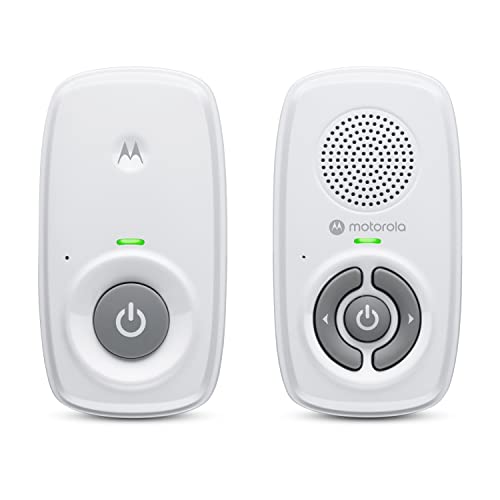
Motorola Nursery AM21 Audio Monitor
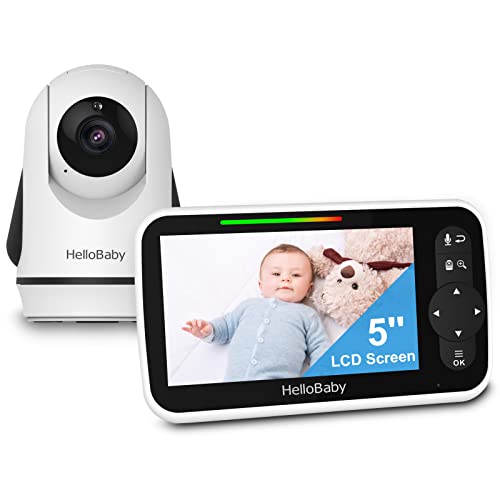
HelloBaby 5″ No WiFi Monitor, 30Hr Battery

Motorola Nursery PIP10 Audio Monitor

Motorola Nursery PIP15 Dual-Room Monitor

Jartoo ANR Hybrid Smart Monitor, 5.5″ Screen

Babysense 5″ HD Split-Screen Monitor, 2 Cameras

HelloBaby HB6550 Video Monitor, 5″ Screen
A Deeper Look At The Lineup
The LeapFrog LF2423 keeps its footprint small, pairing a compact camera with a 2.8-inch parent unit in white. Its transmission runs over encrypted 2.4GHz frequency-hopping technology, which means the signal constantly changes channels between camera and handset, leaving nothing open on your home network.
Battery endurance is where this one earns its place. You get roughly twelve hours of continuous video on a charge, stretching toward nineteen in audio-only mode, enough to cover most nights without parking the handset on a charger. In our view that makes it a strong fit for co-sleeping rooms where outlets are scarce.
What Stands Out
- Encrypted frequency-hopping link keeps the feed off any network entirely.
- All-night video runtime means fewer mid-week charging routines.
- The 2.8-inch IPS panel holds color accuracy from odd viewing angles, handy when the handset lies flat on a nightstand.
- No account, app, or internet setup, so it works from the first plug-in.
Things To Consider
- A 2.8-inch screen reads fine at arm’s length but feels tight across a large living room.
- Lithium cells age faster if the unit stays plugged in permanently, so occasional full discharge cycles help.
At A Glance
Who It Suits Best
Apartment dwellers who want a fuss-free, always-ready video feed without a second charging cable in the bedroom.
Where Another Pick Suits Better
Anyone wanting a bigger picture should step up to the HelloBaby HB6550, whose five-inch display suits shared living spaces better.
Not every household needs eyes on the crib. The Motorola AM21 strips things back to sound, using DECT wireless technology, a dedicated cordless standard that operates on its own protected band rather than sharing spectrum with your router. The result is a clean channel with very little interference, even in apartment buildings packed with competing devices.
Range reaches about 1,000 feet in open conditions, which comfortably covers a house plus backyard trips. Volume sits on the parent unit itself, and cry detection nudges the alert level so you’re not listening to every rustle. Owners commonly report the pocket-sized handset disappearing into robe pockets during morning chores, which is exactly the point of audio-only design.
The Helpful Details
- DECT’s dedicated band resists interference far better than shared 2.4GHz channels.
- Roughly 1,000 feet of coverage handles multi-floor homes and garden time alike.
- Cry detection filters background noise so alerts mean something.
- On-unit volume control works one-handed while holding a baby.
Worth Noting
- There’s no visual check, so confirming whether crying is hunger or a dropped pacifier still requires walking over.
- Thick masonry walls can shave real-world range noticeably below the open-space figure.
Right Fit For
Sound-first parents, especially those in dense housing where WiFi congestion ruins cheaper analog monitors.
A Better Fit Elsewhere
Families wanting both sound and sight will prefer the Babysense split-screen monitor, which pairs HD video with the same kind of closed connection.
Compared with the LeapFrog’s modest 2.8-inch panel, this HelloBaby nearly doubles the viewable area to five inches and stretches runtime dramatically. Thirty hours of battery per charge translates to roughly three full nights of typical use, so the charger becomes a weekly errand rather than a nightly ritual.
The camera moves under your thumb: 355 degrees of horizontal pan and 120 degrees of tilt, controlled remotely from the parent unit, plus zoom for close checks. Two-way talk lets you soothe vocally from another room. Like the LeapFrog, it relies on frequency-hopping encryption over 2.4GHz rather than any home network.
Everyday Advantages
- Thirty-hour battery life removes the daily charge habit almost entirely.
- Remote pan, tilt, and zoom cover corner-to-corner room views without entering the nursery.
- Two-way audio settles stirrings before they become full wake-ups.
- The five-inch TFT LCD gives genuinely readable detail across a kitchen counter.
Trade Offs
- A larger screen draws more power when brightness sits high, so dimming overnight extends runtime further.
- The camera’s moving parts deserve a dust-free shelf spot to stay smooth over years of use.
Quick Facts
Who Will Love This
Busy households juggling chores and naps, where nobody has time to babysit a battery meter.
Look Elsewhere When
Twin and sibling setups are better served by the Babysense split-screen model, which ships with two cameras from day one.
The PIP10 shares its DNA with the AM21 above, delivering the same DECT-based private link and 1,000-foot reach in a leaner package. Motorola positions it as the entry point into the family, and the spec sheet backs that up: volume control on the handheld, cry detection, and a parent unit light enough to carry room to room.
You may find the simplicity refreshing after years of app-connected gadgets. Pairing happens automatically, there’s nothing to update, and the audio quality stays consistent because DECT dedicates bandwidth to your link alone. The trade-off is obvious: no video, no talk-back, just dependable listening.
Reasons It Performs
- DECT connection delivers steady clarity free of router traffic.
- Cry detection raises the alarm only when it matters.
- Compact parent unit slips into pockets and diaper-bag side pouches.
Minor Gripes
- No two-way talk, unlike the PIP15 later in this list.
- Audio-only means routine visual checks still require a trip down the hall.
- Wall-plug placement matters; owners commonly report weaker signal when the nursery unit sits behind furniture.
Built With In Mind
Cost-conscious first-time parents setting up a small nursery who trust their ears more than a screen.
Swap It Out When
Grandparents’ houses or second homes might justify the AM21 instead, thanks to its slightly broader feature set at a similar size.
Two kids in two rooms usually means two monitors cluttering two nightstands. The PIP15 collapses that into one system: a pair of nursery units feeding a single handheld parent device, with range extending to about 1,500 feet, half again as far as the PIP10 manages.
Two-way talk earns real-world value here, letting you settle a toddler without crossing the house, and a built-in night light doubles as a gentle presence in dark rooms. Setup stays appless and WiFi-free, consistent with the rest of Motorola’s audio line.
Everyday Perks
- One parent unit listens to two rooms, cutting nightstand clutter in half.
- Two-way talk resolves minor fusses from wherever you happen to be.
- Night light offers soft illumination without a separate lamp purchase.
- Approximately 1,500 feet of range covers large homes and outdoor areas.
Softer Spots
- Juggling channels between rooms takes a button press or two mid-listen.
- With three powered units in play, outlet planning needs a little forethought during setup.
Core Details
The Right Fit
Families with twins, close-in-age siblings, or a nursery-plus-playroom arrangement under one roof.
Consider Something Else When
Single-child homes get everything they need from the simpler PIP10, at less cost and with fewer units to place.
The Jartoo ANR bends this list’s rules in a useful way: it’s a no-WiFi monitor by default, with a switchable app mode for remote viewing. At home, the camera talks straight to the 5.5-inch handheld over a long-range link rated near 1,860 feet. Travel days flip the same camera into connected mode through the companion app.
Image quality leads the field here. The 2K sensor resolves roughly four times the detail of standard monitors onto an IPS panel, backed by 360-degree pan, 148-degree tilt, and 1-5x zoom. AI-powered detection watches for meaningful movement, and the mount keeps installation tidy on a wall or shelf.
Where It Delivers
- 2K clarity makes breathing-check glances genuinely reassuring at distance.
- Hybrid design serves privacy-minded homes and traveling grandparents equally.
- Near 1,860 feet of local range dwarfs every other video pick here.
- AI detection trims false alarms compared with motion-only triggers.
Points To Note
- The app layer adds an account step some closed-system purists would rather skip.
- Continuous recording features depend on staying connected, so offline behavior differs by mode.
The Numbers That Matter
Whose Shelf It Belongs On
Tech-comfortable parents who want premium image quality today and optional remote access tomorrow.
Skip It When
Strictly offline households should stick with the HelloBaby HB6550, which never touches an app at all.
Where the Motorola PIP15 splits attention between rooms by audio alone, the Babysense shows both at once. Two cameras ship in the box, displaying side-by-side on the five-inch screen, and the system accepts up to four total as your family grows. Each camera carries its own night light, a small touch that saves buying separate nursery lamps.
Video resolution lands at 720p HD with remote pan, tilt, and 4x zoom, transmitted over a closed non-WiFi link good for roughly 1,000 feet outdoors. Audio focuses on one camera at a time, though SCAN mode rotates listening every fifteen seconds automatically. The 4000mAh battery supports long viewing sessions between charges.
A Favorable Mix
- Genuine split-screen viewing of two rooms on one display.
- Expandable to four cameras, future-proofing a growing household.
- SCAN mode cycles audio between cameras so neither child goes unheard.
- Integrated night lights on both included cameras.
- Large 4000mAh cell sustains extended evening use.
Small Caveats
- 720p trails the Jartoo’s 2K sharpness noticeably on the same-size screen.
- Split-screen mode consumes battery faster than single-camera viewing.
Key Specs
Best Suited To
Parents of twins or two young children who want simultaneous visuals without juggling handsets.
Reach For A Different Pick When
Single-nursery families save money and complexity with the HelloBaby 30-hour model reviewed earlier.
HelloBaby appears twice on this list for good reason, and the HB6550 is the quieter sibling of the 30-hour model above. It carries the same five-inch display, 355-degree pan, 120-degree tilt, and 2x zoom, with one refinement worth highlighting: the camera motor moves silently, so adjusting your view won’t stir a light sleeper.
Infrared night vision keeps the picture legible in a fully darkened room, and two-way audio rounds out the toolkit. There’s no app, no account, no network involvement anywhere in the chain. For households that want proven video basics without extras they’ll never touch, this hits a comfortable middle ground.
Advantages To Know
- Silent pan-and-tilt motor preserves sleep during view adjustments.
- Five-inch color display offers easy viewing from across a room.
- Infrared night vision maintains clear imagery after lights-out.
- Fully offline operation means zero setup beyond plugging in.
Points To Keep In Mind
- Zoom tops out at 2x, less reach than the Babysense’s 4x.
- Only one camera per system, so expanding to a second room isn’t straightforward.
Perfect Match For
Wait, scratch that framing. This suits parents of a single baby in a standard-sized nursery who value quiet operation over maximum zoom.
Another Choice May Suit
Shoppers wanting longer runtime should compare against HelloBaby’s own 30-hour variant, which trades a few dollars for triple the battery stamina.
What Matters Most Before Choosing Non-Wifi Baby Monitors
Range Versus Your Floor Plan
Manufacturer range figures assume open air. Walls, appliances, and masonry cut real-world reach significantly, sometimes by half. Measure the longest path between nursery and wherever you’ll actually sit, then choose a monitor rated well beyond it.
Battery Reality
Battery claims describe ideal conditions. Continuous video drains fastest, audio-only sips power, and screen brightness shifts the math further. Heavy overnight users should favor the largest cells available, like the 4000mAh pack in the Babysense.
Audio-Only Isn’t a Compromise
Plenty of experienced parents deliberately skip video. DECT audio models such as the Motorola pair deliver cleaner signals than cheap video units, weigh less, and cost less. Sound tells you what matters; sight mostly confirms what you already suspect.
Security By Design
Closed-circuit monitors using frequency-hopping or DECT transmission never expose a feed to the internet. That architecture, not a password, is what removes remote-access risk entirely.
Key Considerations Across These Picks
Traps First Timers Fall Into
The classic mistake is matching range ratings to your home’s square footage instead of wall count. A 1,000-foot rating shrinks fast through brick. Second trap: ignoring battery chemistry. Leaving lithium handsets on chargers around the clock shortens their useful life.
What Separates Premium From Basic
Higher-tier models spend their extra cost on sensors and motors: 2K imaging, wider pan arcs, silent actuators, bigger batteries. Pay up when image detail or multi-camera expansion genuinely changes your nightly routine; otherwise, a basic DECT audio unit covers most needs admirably.
Frequently Asked Questions
Do non-wifi baby monitors work during internet outages?
Yes, completely. These systems transmit directly between camera and parent unit, so your router plays no role whatsoever.
How far do these monitors really reach indoors?
Expect roughly half the advertised open-air figure in typical homes with multiple walls. Masonry construction reduces it further.
Can I add a second camera later?
Some can, notably the Babysense system supporting up to four cameras. Single-camera models like the HelloBaby HB6550 generally cannot expand.
Is DECT audio quality worse than video monitor audio?
Usually the opposite. DECT dedicates a clean channel to your link, often producing clearer sound than budget video monitors sharing crowded bands.
Do these monitors need any subscription?
None. Every pick here records locally or streams live only, with no recurring fees attached.
Closing Remarks
Every monitor above trades connectivity for control, putting the entire feed in your hands and nowhere else. Match the range to your walls, the battery to your nights, and the screen size to your habits, and any of these eight will serve reliably through the toddler years. Trust the spec sheet over the marketing, and you’ll land well.
