

An indoor cat watching birds through glass only gets half the story. A catio closes that gap: a fully enclosed outdoor space where your cat can sniff real air, climb real platforms, and nap in real sun without any risk of slipping away or meeting a neighborhood predator. The eight options below cover the whole range, from a pop-up mesh playpen you can toss in the car to a walk-in, window-mounted structure that becomes part of your house. Each one suits a different yard size, budget mindset, and cat personality, so match the enclosure to your space before anything else.
The Leading Options At A Glance

GONPETGP Portable Catio Mesh Tent Playpen with Tunnel

PAWING DIY Catio Metal Wire Kennel for 1-3 Cats
YITAHOME 94 Inch Outdoor Cat Enclosure

TIMHAKA Catio Outdoor Cat Enclosure 72 inch Grey

Rywell 3-Tier Foldable Catio Tent with Carry Bag

NYEEKOY 71in Catio Waterproof Roof & Perch
PawHut Window Catio Outdoor Cat Enclosure Gray
Aivituvin Cat House Catio on Wheels 70.9 inch
The Details Behind The Selections
This is the lightest option here by design. A sprung steel frame pops open like an umbrella, giving you a circular mesh play area plus a surrounding tunnel in seconds, no tools involved.
For campers, beach days, or picnics where a curious cat wants out of the carrier, that instant setup is the entire appeal. The oxford fabric floor keeps claws from snagging while pets scramble around inside.
What Earns Its Place
- Two-piece layout pairs a main play dome with an encircling tunnel for extra roaming room
- Breathable mesh lets air move freely, so pets stay comfortable through warm afternoons
- Pop-open sprung steel frame means zero assembly, just unfold and stake your spot
- Oxford fabric base resists claw snags during energetic play sessions
- Works for rabbits, puppies, and other small animals, not just cats
Small Caveats
- Mesh construction is portable rather than permanent, so expect seasonal wear at stress points with heavy daily use
The Right Fit
Travelers and renters who want supervised outdoor time without installing anything permanent will get the most from this one.
A Better Fit Elsewhere
For a fixed backyard station with real weather protection, the YITAHOME 94 Inch Outdoor Cat Enclosure offers far more durability and space.
Where the GONPETGP tent trades permanence for portability, this PAWING kit goes the other way: detachable metal wire panels you configure yourself into a rigid cage. The listed dimensions run up to 41 by 41 inches at the base with a 55-inch height, which sounds modest until you realize vertical space is what cats actually want.
Apartment dwellers with a balcony corner or a spare indoor nook are the natural audience. You furnish it with your own litter box, bowls, pads, and a small tree, turning the shell into a true mini habitat.
Points In Its Favor
- Square wire panels are load-bearing rated, so shelves and accessories mount securely
- Detachable design lets you reshape or relocate the run as your space changes
- Room enough for one to three cats plus their supplies in a compact footprint
Things To Consider
- Assembly takes real time, since every panel connects individually, so set aside an afternoon
- No roof cover is mentioned, so outdoor placement in rain needs your own solution
Quick Facts
Made For
Urban cat owners with limited square footage who enjoy a hands-on setup and want something sturdier than fabric.
Swap It Out When
Anyone wanting a walk-in structure with built-in shelter should look at the NYEEKOY 71in Catio instead.
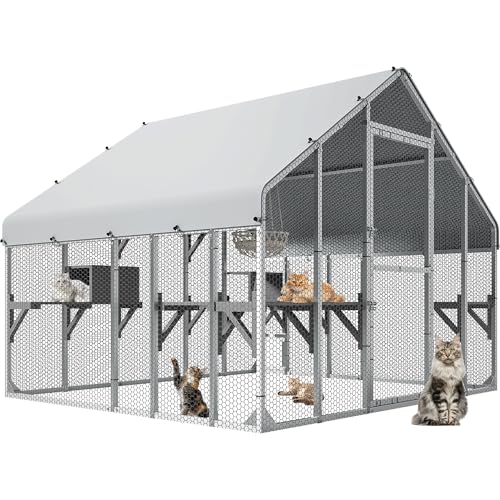
This is the biggest footprint in the roundup, stretching nearly 95 inches long and 80 inches wide with a height just over 76 inches. That’s tall enough for most adults to step inside comfortably, which changes the ownership experience entirely: cleaning, rearranging shelves, and coaxing a stubborn cat out all happen without crouching.
The frame uses metal tubing wrapped in dense hexagonal mesh, a combination aimed at long-term outdoor duty rather than weekend use. Multi-cat homes are where this earns its keep.
Noteworthy Benefits
- Nearly 8-by-6.5-foot floor plan gives several cats territory to share without conflict
- Dense hexagonal mesh keeps claws in and paws of local wildlife out
- Walk-in height makes daily upkeep far less awkward than crawl-in designs
- Multi-level structure supports climbing and lounging zones at different heights
Points To Note
- At this size you’ll need a genuinely flat, clear patch of yard, and panel assembly is a two-person job in practice
The Numbers That Matter
Who Will Love This
Households with three or more cats and a generous yard who want a semi-permanent outdoor habitat.
Reach For A Different Pick When
Smaller yards or tighter budgets fit the PAWING DIY Catio Metal Wire Kennel better, since it covers similar needs in a fraction of the space.
Some cats treat a catio as a gym; others treat it as a screened-in porch for sleeping. This TIMHAKA build leans hard into the second group, pairing its 63-by-24.8-inch frame with not one but two enclosed sleeping houses.
An added middle platform plus enlarged side shelves give jumpers a left-to-right route, so athletic cats still get their laps in. Compared with the sparse PAWING wire kit, this arrives closer to turnkey furniture than raw panels.
Notable Upsides
- Two spacious sleeping houses let multiple cats nap simultaneously without turf wars
- Waterproof cover shields the interior from rain and sun between uses
- Enlarged side shelving creates a continuous jumping circuit along the walls
- Extra middle platform breaks up the climb for kittens and seniors alike
Less Ideal Details
- The 24.8-inch depth is slim, so large-bodied cats may find lateral movement snug compared with the wider YITAHOME run
- Fabric covers need periodic checking for wear where they tension over the frame
Who Should Grab It
Owners of laid-back, sun-napping cats who want comfort features included rather than sourced separately.
Consider Something Else When
Maximal floor space matters more than cozy hideaways, and the Rywell 3-Tier Foldable Catio Tent delivers more tiered room in a similar spirit.
The GONPETGP tent wins on packability, but this Rywell model answers with capacity: three stacked tiers, five windows for viewing, and a weatherproof-treated shell that tolerates sun and drizzle better than basic mesh.
Rust-resistant steel framing and ultra-fine mesh aim to shrug off claws and teeth while keeping insects and curious wildlife at a distance. A carry bag is included, so patio-to-trunk moves stay realistic.
Everyday Perks
- Three-tier layout triples usable surface without growing the ground footprint
- Five mesh windows spread sightlines around the perimeter, reducing crowding at one vantage point
- Folds flat into the supplied bag for storage between outings
- Rust-resistant steel holds up better outdoors than plain sprung-wire frames
- Ultra-fine mesh doubles as insect screening during buggy evenings
What To Weigh
- Soft-sided structures rely on proper anchoring, so uneven ground or strong gusts deserve attention before leaving cats unattended
- Hammock attachments are a common question mark, worth confirming fit once assembled
Feature Snapshot
Right Fit For
Patio entertainers and road trippers who want tent convenience with more interior volume than a standard pop-up.
Where A Sibling Pick Shines
Permanent-yard owners should skip folding entirely and consider the Aivituvin Cat House Catio on Wheels for its wooden, wheeled stability.
Maintenance is where most enclosures quietly become chores, and Nyeekoy designed around that problem. Large doors open wide enough for a person to walk in, so scrubbing floors and swapping litter happens standing up rather than on your knees through a hatch.
Setup leans on pre-drilled, labeled parts with a guided manual, which trims the usual frustration of panel kits. At 71 inches tall it sits between the compact PAWING kennel and the sprawling YITAHOME run in scale.
What Makes Sense
- Walk-in door access turns deep cleaning from a crawl job into a five-minute task
- Pre-drilled, labeled components shorten assembly and reduce misalignment errors
- Sun-panel roofing sheds water while still letting daylight filter through
- Indoor-outdoor flexibility means seasonal relocation is straightforward
Practical Considerations
- Panel roofs handle rain well but check seals seasonally, as gasket wear is a typical long-term issue on translucent roofing
Core Details
Who It Suits Best
Time-pressed owners who value easy upkeep over maximum footprint will click with this design.
Another Choice May Suit
Cat households wanting more horizontal roaming room should compare the PawHut Window Catio Outdoor Cat Enclosure, which stretches past nine feet.
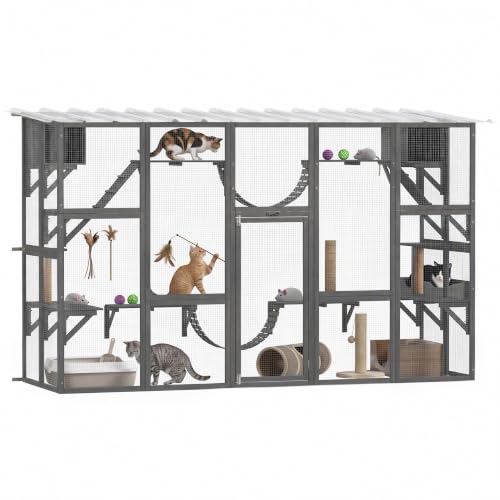
Everything before this sits free-standing in your yard. The PawHut attaches outside a window instead, creating an extended patio your cats enter directly from indoors, no carrying them out required.
At 118 inches long by 74 inches high, it’s the longest structure in the list, and it comes dressed out: six platforms, two jumping ledges, and bridges connecting the sections. An open entryway keeps the window route simple for nervous climbers.
A Few Highlights
- Direct window entry means cats come and go on their own schedule
- Six platforms plus two ledges form a genuine climbing circuit across ten feet
- Bridges between sections add variety that flat cages lack
- Gray finish reads more like home siding than pet equipment
Details To Watch
- Window mounting demands careful measurement and secure fixing, so installation skill matters more than with freestanding units
- The narrow 37.5-inch depth limits sideways sprawl compared with the wide YITAHOME floor plan
Key Specs
Built With In Mind
Homeowners with a suitable window wall who want their cats self-sufficient about going outside.
Not Your Match When
Renters and anyone avoiding wall modifications will find the freestanding NYEEKOY 71in Catio a simpler path.
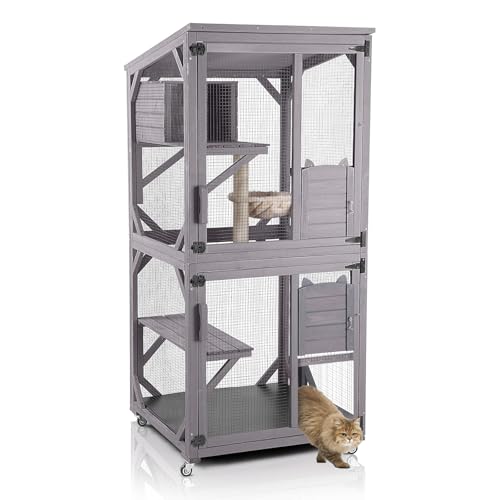
Wood changes the character of a catio. This Aivituvin house stands 70.9 inches tall on a 31.5-inch square base, finished with an asphalt waterproof roof, the same material on many garden sheds, and reinforced wooden strip framing around the perimeter.
Four casters make repositioning a one-person job, and two of them lock as brakes to hold the unit steady. Three tiers of platforms, removable hammocks, sisal scratch surfaces, and an upgraded resting box come built in, unlike the bare shells earlier in this list.
What Works In Its Favor
- Asphalt roofing handles year-round weather better than fabric or plastic panels
- Brake-equipped casters let you chase sun or shade without lifting anything
- Reinforced wooden strips stiffen the structure against wobble over time
- Removable hammocks and sisal elements simplify cleaning and refresh worn parts
- Enclosed resting box gives shy cats a private retreat within the run
Trade Offs To Consider
- Wooden structures need occasional sealing or inspection in wet climates, a routine metal and fabric picks don’t demand
- The 31.5-inch base is compact, so very active cats may prefer the longer PawHut runway
Technical Highlights
Whose Shelf It Belongs On
Backyard owners treating a catio as permanent garden furniture will appreciate the wood-and-asphalt build most.
Look Elsewhere When
Seasonal users who store gear each winter are better served by the foldable Rywell tent.
What Matters Most Before Choosing Outdoor Catios
Space And Placement First
Measure twice. Freestanding runs like the YITAHOME need a flat, shaded patch big enough for the full footprint plus a maintenance buffer, while window models such as the PawHut require a structurally sound mounting wall. Placement determines whether your cats get morning sun or afternoon heat, and both extremes matter for comfort.
Material Matches Climate
Fabric tents breathe and pack away but age fastest under constant UV. Powder-coated steel and hexagonal mesh sit in the middle, handling seasons well with occasional checks. Wood with asphalt roofing, as on the Aivituvin, weathers best long term yet asks for periodic sealing in wet regions. Match the material to how many months a year the unit stays outside.
Access Shapes Daily Life
Walk-in doors, wide front hatches, and removable trays separate pleasant ownership from daily frustration. The NYEEKOY’s person-sized entry is a good benchmark: if cleaning requires crawling, you’ll clean less often, and hygiene slips.
Count Your Cats Honestly
One calm senior thrives in a compact kennel. Three young cats need layered platforms, duplicate napping spots, and length to avoid territorial friction. Size for the household you actually have, not the one you hope for.
Key Considerations Across These Picks
Traps First Timers Fall Into
The classic error is buying for looks instead of access. A beautiful enclosure with a tiny hatch becomes a chore magnet, and neglected spaces stop getting used. Second slip: skipping the anchor step on soft-sided tents. Wind and a determined cat will test every stake, so secure the base before the first session. Last, many shoppers forget indoor dimensions matter too, since balcony and apartment placements often have tighter clearances than product photos suggest.
Where The Extra Money Goes
Higher-tier builds spend on structure and weatherproofing: thicker steel framing, denser mesh, asphalt or polycarbonate roofing, and integrated furniture like platforms and houses. That translates to years rather than seasons of outdoor service and less time sourcing add-ons separately. Paying up pays off for permanent installations in exposed yards; occasional fair-weather users rarely recoup the difference.
Frequently Asked Questions
Do cats actually use catios?
Most adapt within days, especially once a perch faces bird activity. Shy cats warm up faster when you place familiar bedding inside first.
Can a catio stay outside year round?
Metal and wood-roofed models handle continuous exposure well. Fabric tents last longest when stored between seasons.
How do I keep my cat from escaping?
Inspect mesh seams, latches, and door gaps monthly, and always supervise early sessions until you know the weak points.
Are catios safe from predators?
A fully enclosed mesh structure blocks direct contact with wildlife. Anchor soft-sided units firmly and repair tears promptly.
Where should I position a catio?
Partial shade near a window or door works best. Morning sun with afternoon shade keeps temperatures comfortable through summer.
Bottom Line
Your space and your cats’ personalities decide this more than any ranking. Campers and renters should start with the GONPETGP pop-up or the Rywell foldable tent, both of which disappear into storage when the season ends. Homeowners with room to commit will get the most lasting value from the YITAHOME run or the wheeled Aivituvin house. Measure your spot, count your cats, and pick accordingly.
