

A loose dog is every owner’s quiet fear. These perimeter collars handle that worry with satellite-based boundaries instead of buried wire, and several skip monthly subscriptions entirely. Below you’ll find replacement batteries, premium GPS systems, budget two-packs, and a few options built for multi-dog homes, so matching your yard and your dog’s temperament gets a lot easier.
How The Shortlist Stacks Up

Perimeter Technologies Pet Fencing Collar Batteries 4-Pack

Halo Collar 5 GPS Wireless Dog Fence
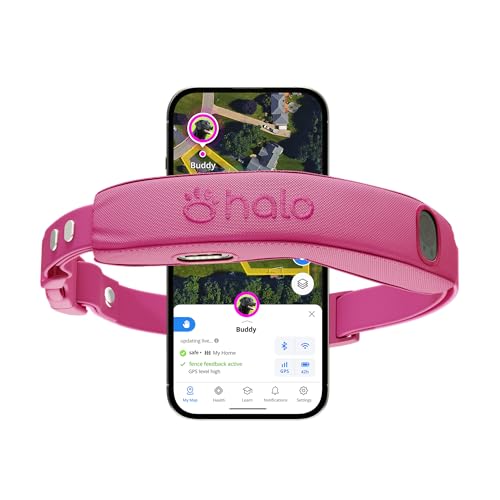
Halo Collar 5 GPS Wireless Dog Fence

Halo Collar 5 GPS Wireless Dog Fence, Graphite

GPS Wireless Dog Fence System Collar 2 Modes 2 Pack

Dogtra GPS Fence No Subscription App-Controlled Wireless Fence Collar

Lilyeel GPS Wireless Dog Collar Fence System

PetSafe Guardian GPS Dog Fence, 3/4 Acre+
Why These Options Stand Out
A dead receiver collar does nothing at 6 a.m. when your dog tests the boundary line, which is why keeping spares on hand matters more than most owners expect. This four-pack of 6-volt cells comes from Perimeter Technologies itself, so the fit and output match the collars they were designed around.
They serve Extreme Dog Fence receivers, Perimeter 700-series compatible collars, and the PCC-200 Comfort Contact units. One caution worth knowing: they are not interchangeable with Invisible Fence Brand hardware, so confirm your collar model before ordering.
What It Does Well
- Genuine manufacturer cells, so voltage output matches what your receiver was tuned for.
- Four batteries per pack means fewer mid-season reorder scrambles.
- Works across several Perimeter-compatible collar families, including Comfort Contact models.
- No tools or reprogramming needed, just swap and go.
Things To Consider
- Incompatible with Invisible Fence Brand collars, a mismatch owners commonly report after guessing wrong.
- Disposable cells mean recurring cost over years of ownership.
Who It Suits Best
Anyone already running a Perimeter or Extreme Dog Fence wired system who wants reliable spares without hunting specialty stores.
Where Another Pick Suits Better
Owners starting from scratch should look at the PetSafe Guardian GPS Dog Fence instead, since it needs no buried wire or proprietary batteries.
The Halo Collar 5 leans on something called dual-frequency GPS, meaning it reads both L1 and L5 satellite signals rather than one. L5 carries a stronger, cleaner signal, so the collar resists the drift that plagues cheaper GPS units near tree lines or buildings.
A network of ground stations pushes real-time corrections to the collar, tightening location accuracy to roughly two feet. For a dog pacing the edge of a boundary, that margin is the difference between a timely warning tone and a late one. In our view, that engineering justifies the premium positioning for serious containment needs.
Good Reasons To Consider
- Dual-frequency L1/L5 reception holds accuracy where single-band collars wander.
- Real-time ground-station corrections keep the reported position close to your dog’s actual spot.
- Drift prevention reduces false corrections near dense foliage or structures.
- An AI obstacle filter helps the system account for things like fences and terrain features.
Worth Noting
- Satellite-dependent systems need clear sky view, so heavily wooded lots may see slower lock-on.
- Rechargeable collars need a charging routine; forgetting overnight can sideline containment by morning.
At A Glance
Made For
Owners of larger or irregularly shaped properties who want top-tier positioning accuracy and don’t mind paying for it.
Consider Something Else When
Budget-focused shoppers with two dogs will get more coverage per dollar from the DJNFGQ 2-pack further down this list.
This listing covers the same Halo Collar 5 platform in an alternate configuration, so everything said about the first unit applies here too. You get the Precision+ positioning stack, the dual-satellite reception, and the correction network that keeps the collar honest about where your dog actually stands.
The practical difference comes down to availability and variant selection at checkout. Owners adding a second collar for a second dog often grab whichever variant ships fastest, since the firmware and app experience stay identical across listings. Functionally, nothing is lost choosing this one over the primary listing.
The Good Stuff
- Same Precision+ dual-frequency engine as the flagship Halo listing.
- Ground-station corrections hold the boundary tight enough for confident containment.
- An easy way to add a matching second collar for multi-dog homes.
Points To Note
- Variant listings can shift stock levels, so check shipping estimates before committing.
- Like all Halo units, it depends on satellite visibility; deep valleys and dense canopy can degrade performance.
Right Fit For
Households expanding from one contained dog to two, wanting identical hardware and a shared setup routine.
Not Your Match When
Rural owners on three-quarter-acre-plus lots may find the Dogtra GPS Fence’s layered backup boundaries a better structural fit.
Same collar, quieter wardrobe. This Graphite version wraps the Halo Collar 5’s electronics in a dark, low-profile finish that doesn’t scream “tracking device” at the dog park. Underneath, the Precision+ package is unchanged: dual-band satellite reading, drift prevention, and those real-time ground corrections.
Color sounds cosmetic until you own a light-coated dog whose white fur makes pale collars vanish into the lawn. The darker shell also tends to hide scuffs and mud better over a season of daily wear, which owners of active breeds commonly appreciate.
Advantages To Know
- Graphite finish stays visually discreet on dark-coated dogs and hides everyday grime.
- Full Precision+ accuracy, including roughly two-foot positioning via ground-station corrections.
- Identical app workflow, so mixed-color households manage both collars in one place.
Small Caveats
- You’re paying Halo pricing for a color choice; the technology is identical to the standard listing.
- Dark shells can run warm in direct summer sun on thick-coated breeds, a consideration worth weighing.
Who Will Love This
Style-minded owners who want flagship GPS containment without the techy white-collar look.
Look Elsewhere When
Cost-sensitive shoppers should compare the Lilyeel system, which adds five-pet tracking at a friendlier entry point.
Two dogs, one box, no recurring plan. This DJNFGQ pair uses satellite positioning to define a boundary, then triggers corrective feedback as your dog approaches the edge you’ve set. There’s no wire to bury and no base station to position, which makes setup a same-afternoon job for most yards.
Compared to the Halo units above, you trade refined accuracy for affordability, and for open suburban lots that trade often works out fine. The two-mode design lets you adjust how assertive the correction feels, useful when one dog is bold and the other is timid.
Everyday Advantages
- Two collars included, so containing a pair of dogs starts with a single purchase.
- GPS-based boundaries mean zero digging, trenching, or wire maintenance along fence lines.
- Adjustable correction behavior suits different temperaments in the same household.
- Runs without a monthly service plan, keeping long-term ownership costs flat.
Softer Spots
- Satellite-only positioning is less refined than dual-frequency systems, so accuracy varies with sky conditions.
- Budget brands typically offer thinner long-term support than established names like PetSafe.
Quick Facts
Who Should Grab It
Multi-dog owners with open yards who want functional containment without premium pricing.
A Better Fit Elsewhere
Single-dog owners wanting polished apps and layered safety zones should step up to the Dogtra GPS Fence.
Dogtra built its reputation on e-collars for hunters, and that training DNA shows here. The GPS Fence layers four protection rings around your property: a warning zone, a primary boundary, and two backup fences behind it. Should a determined dog blow through the first line, the backups keep working.
The phone app handles setup only; once your circular or custom-shaped boundary is drawn, the collar runs independently, so a dead phone battery never disables containment. Note the property minimum of three-quarters of an acre, and remove the collar indoors.
Real-World Strengths
- Layered warning zone plus primary fence plus two backups gives escapees multiple chances to turn back.
- Custom-shaped boundaries follow odd lot layouts instead of forcing one big circle.
- IPX9K-rated waterproofing shrugs off ponds, streams, and storm-soaked play sessions.
- No subscription fees keeps the total cost of ownership predictable year after year.
- Supports up to 30 stored fences, handy for seasonal grazing areas or a second property.
Trade Offs
- Designed for properties of 3/4 acre or larger, so small suburban lots fall below the intended footprint.
- Rated for dogs 15 lbs and up, ruling out toy breeds.
Key Specs
Best Suited To
Rural and large-lot owners with water-loving, strong-willed dogs who need redundant containment.
Swap It Out When
Small-yard owners should choose the PetSafe Guardian, which accommodates tighter footprints more comfortably.
Where the DJNFGQ pack covers two dogs simply, the Lilyeel system goes wider: the companion phone tracker follows up to five pets, and remote training controls live alongside the fence function in the same app. For a small farm or homestead juggling several animals, that consolidation matters.
Boundaries are drawn as custom polygons, so you can trace a barnyard, exclude a garden, or wrap an irregular field shape directly in the app. Alerts layer from beep to vibration to static correction as your dog nears the drawn edge, giving you graduated feedback rather than one blunt response.
What Helps Most
- Tracks up to five pets through the phone app, consolidating collars under one login.
- Polygon boundary drawing matches real-world property shapes, not just circles.
- Graduated beep, vibrate, and correction alerts let dogs learn the line gently.
- Built-in remote training doubles the collar as a behavior tool beyond the fence.
- No ongoing subscription charges for core boundary and tracking functions.
Room For Improvement
- Reliable operation assumes steady outdoor GPS signal; indoor or canyon-like terrain weakens it.
- App-centric control means a lost or broken phone interrupts adjustments until replaced.
Feature Snapshot
The Right Fit
Homestead and farm owners managing three to five dogs who want fence and training controls unified.
Another Choice May Suit
Two-dog households wanting maximum simplicity over feature depth will prefer the DJNFGQ 2-pack.
PetSafe has sold containment systems longer than most competitors have existed, and that track record is the real product here. The Guardian runs on the company’s AccuGuard positioning technology, built specifically to reduce the false corrections that early GPS fences became known for.
Setup skips shovels entirely: no digging, no buried wire, just boundary customization through the companion interface. Compared to the Halo Collar 5, you give up some positioning sophistication and gain a support network with decades of replacement parts and troubleshooting documentation behind it. For a first fence, that safety net counts for a lot.
The Case For It
- AccuGuard technology targets accurate boundary detection, reducing stray corrections near the line.
- Wire-free setup means an afternoon install with no trenching or lawn repair afterward.
- Subscription-free operation avoids a monthly bill stacked on top of the hardware cost.
- Backed by a category veteran with deep troubleshooting resources.
Worth Bearing In Mind
- Intended for properties of 3/4 acre or larger, mirroring the Dogtra’s footprint requirement.
- Training still takes patience; most manufacturers recommend two weeks of supervised boundary introduction.
Core Details
Perfect Match For
First-time electronic-fence owners who value brand longevity and accessible customer support over cutting-edge specs.
Skip It When
Tech enthusiasts chasing maximum GPS precision will get more from the Halo Collar 5’s dual-frequency system.
What Matters Most Before Choosing Perimeter Collars For Dogs
Match The System To Your Property
Lot size is the first filter, not price. Both the Dogtra GPS Fence and PetSafe Guardian specify a 3/4-acre minimum, while satellite-only budget units perform best with open sightlines. Heavily wooded lots weaken any GPS signal, so dense tree cover pushes you toward dual-frequency designs like the Halo Collar 5.
Count Your Dogs Before You Count Features
A two-pack like the DJNFGQ system solves a two-dog problem in one purchase, while the Lilyeel extends to five pets under one app. Buying single collars separately usually costs more and fragments your management across different interfaces.
Weigh Recurring Costs Honestly
Subscription fees can exceed the hardware price within two years. Every option in this roundup operates without mandatory monthly plans, but verify that claim on the current listing before checkout, since terms occasionally change.
Respect The Training Curve
No collar contains an untrained dog reliably. Plan on one to two weeks of leash-guided boundary introductions, praise at the warning tone, and supervision before trusting the system alone.
Key Considerations Across These Picks
Traps First Timers Fall Into
The most common mistake is buying for the dog you wish you had, not the one you do. A 10-pound terrier needs different collar weight and correction sensitivity than a 70-pound shepherd, and ignoring weight ratings leads to returns. Shoppers also underestimate battery routines; a rechargeable collar left off its charger silently removes your containment layer.
Why Top Tier Costs More
Premium pricing buys positioning hardware, not marketing. Dual-frequency receivers, ground-station correction networks, and layered backup fences all require components that budget units skip. Paying up makes sense on large, wooded, or irregular properties where a missed boundary matters; flat, open quarter-acre lots rarely justify it.
Frequently Asked Questions
Do these collars require burying wire around my yard?
None of the GPS options in this guide do. They define boundaries through satellite positioning configured in an app, though the Perimeter battery pack supports traditional wired systems.
How accurate is GPS containment compared to buried wire?
Quality systems like the Halo Collar 5 hold positions within roughly two feet using dual-frequency signals. Budget satellite-only collars vary more with weather, tree cover, and terrain.
Can one system handle multiple dogs?
Yes. The DJNFGQ pack includes two collars, and the Lilyeel tracks up to five pets through a single phone app.
Are monthly subscriptions always required?
Not for these eight picks. Each operates without mandatory recurring plans, though always confirm current terms on the product page before purchasing.
How long does training take?
Most manufacturers suggest one to two weeks of supervised boundary work. Short daily sessions with positive reinforcement at the warning tone build reliable habits fastest.
Closing Thoughts
The right choice comes down to your property and your pack, in that order. Large or wooded lots reward the Halo Collar 5’s dual-frequency precision, while open multi-dog yards make the DJNFGQ 2-pack or Lilyeel system the smarter spend. Whatever you choose, commit to the training period; the hardware only works as well as the habits your dog builds around it.
