

A pond pump is the heart of any water garden. It drives your waterfall, feeds the filter, keeps oxygen moving, and stops green water from taking over. Pick one too small and your feature trickles; pick one oversized and you pay for it on every electric bill. This roundup sorts eight well-regarded options by flow rate, build quality, and noise so you can match a pump to your pond instead of guessing.
The Shortlist At A Glance
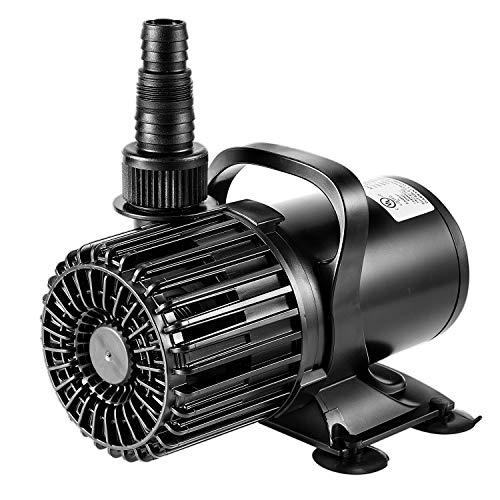
VIVOSUN 4500GPH Submersible Pond Pump

VIVOHOME 220W 4500GPH Koi Pond Pump
Danner Pondmaster 950 GPH Pond-Mag Pump 02720
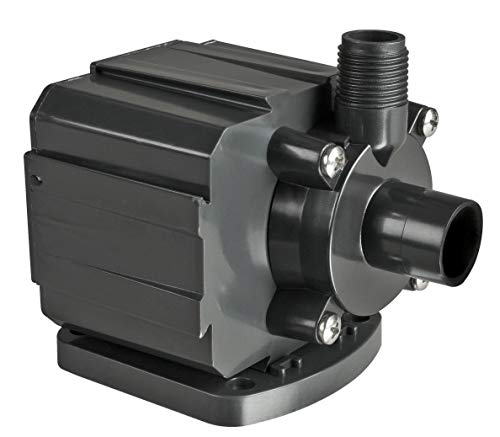
Danner Pondmaster 500 GPH Pump 02525

Alpine Corporation 8000 GPH Submersible Water Pump
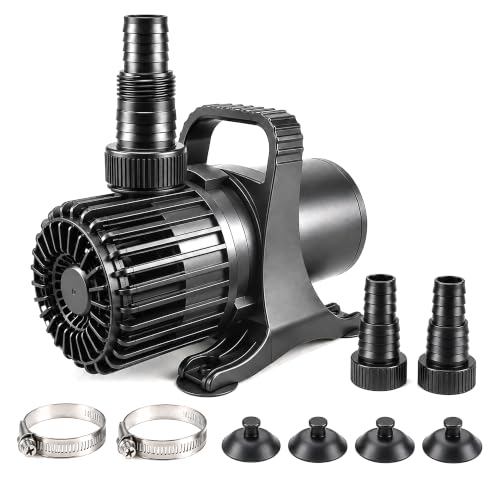
WaterRebirth 100W 1700 GPH Pond Pump

PULACO 800GPH Water Pump with Tubing and Nozzles
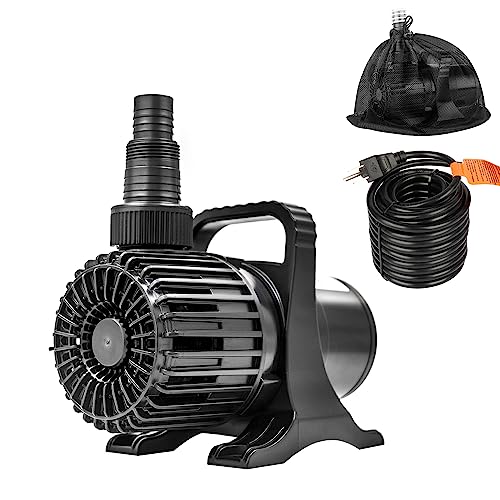
OYO WATER 1800 GPH Submersible Pond Pump
Taking A Closer Look At The Options
This is the pump most backyard builders end up needing: roughly 4500 gallons per hour from a 220-watt motor, enough to run a modest waterfall or feed a mid-size koi pond without tripping breakers. The silicon carbide shaft and drive ring resist wear, which matters because grit in pond water grinds lesser pumps down fast.
In daily use, you’ll hear it more than see it working. Owners commonly report operation around the low-thirties decibel range at typical depths, quiet enough to sit beside the pond without noticing.
The Case For It
- Silicon carbide internals shrug off abrasive debris, extending service life in dirty pond water
- Roughly 4500 GPH moves enough volume to run a two-foot waterfall head comfortably
- IPX8-rated fully submersible housing handles year-round outdoor placement
- Built-in overload protection cuts power before the motor cooks itself during a clog
- Low-wattage draw keeps running costs reasonable compared with higher-draw units
Things To Consider
- The intake screen needs rinsing every few weeks in leafy yards or flow drops noticeably
- Lift performance tapers on taller installations, so measure your waterfall height first
At A Glance
Who It Suits Best
A pond keeper running a 500-to-1500-gallon feature with a small waterfall who wants dependable circulation without a heavy energy bill.
Where Another Pick Suits Better
Large ponds over 2000 gallons need the Alpine Corporation 8000 GPH model, whose bigger motor and longer cord handle serious volume.
On paper this VIVOHOME looks nearly identical to the VIVOSUN above: same 220 watts, same 4500 GPH ceiling. The difference shows up at elevation. Its rated maximum lift reaches about 19 feet, meaning water climbs higher before pressure wins, which matters on terraced or elevated waterfalls.
Koi owners get real value here. Strong circulation plus decent head pressure means one unit can feed both a filter and an upper-tier fall, and the versatile design extends to hydroponics and irrigation duty too.
Everyday Wins
- Nineteen-foot maximum lift outperforms most peers in its wattage class on tall features
- One pump covers koi ponds, fountains, aquariums, and drip irrigation setups
- Submersible body sits discreetly at the pond bottom rather than cluttering the edge
- High hourly turnover keeps oxygen levels steady for stocked fish ponds
- Durable construction holds up through season-after-season outdoor use
Points To Note
- Actual flow drops sharply as lift approaches the maximum, so budget headroom into your plans
- Pre-filtering heavy debris extends cleaning intervals considerably
Made For
Gardeners building a multi-tier waterfall on a koi pond who need genuine vertical push from a single affordable unit.
Consider Something Else When
Fish-free ornamental ponds under 800 gallons are better served by the Danner Pondmaster 500 GPH Pump 02525, which runs simpler and cheaper.
Danner’s Pond-Mag line has been the quiet default among pond professionals for decades, and the 950 GPH version explains why. The magnetic drive design pairs a spinning impeller magnet with an epoxy-sealed motor housing, so there are no shaft seals to leak and fewer parts to fail underwater.
Where the VIVOSUN chases raw flow, this one chases uptime. It’s built for continuous 24/7 filtration duty, the kind of workload that kills cheaper pumps within a couple of seasons.
What Earns Its Place
- Epoxy-encased motor resists water intrusion, the classic failure point of budget pumps
- Magnetic drive runs efficiently around the clock with minimal wear
- Compact footprint tucks easily beside filters or inside skimmer boxes
- Long track record means replacement parts and advice are easy to find
Honest Caveats
- 950 GPH won’t drive anything beyond a gentle cascade, so waterfall ambitions need a bigger unit
- The impeller should be pulled and cleaned periodically, especially after autumn leaf drop
- Plumbing fittings may need separate purchase depending on your hose size
Feature Snapshot
Right Fit For
Serious hobbyists prioritizing reliability and quiet constant-duty filtration over flashy flow numbers.
Not Your Match When
You want plug-and-play fountain spray patterns; the PULACO 800GHP kit bundles tubing and nozzles that this bare pump lacks.
First pond, small footprint, no drama. That’s the brief this little Pondmaster fills. Sharing the same magnetic-drive architecture as its 950 GPH sibling above, it trades volume for simplicity and a smaller wallet hit.
Five hundred gallons per hour suits container ponds, small preformed shells, and standalone fountains. Nothing here will overwhelm a beginner, and nothing here will quit early either.
What Makes Sense
- Modest 500 GPH output matches small features without overspending on capacity
- Same epoxy-encased magnetic drive as Danner’s larger models, scaled down
- Lightweight body repositions in seconds during seasonal cleanup
Softer Spots
- Too little flow for waterfalls or heavily stocked fish ponds
- Intake clogs faster than larger units since the screen area is small
Best Suited To
Newcomers setting up their first small garden pond or tabletop water feature who want proven hardware without complexity.
Look Elsewhere When
Your pond exceeds roughly 600 gallons or includes fish; step up to the Danner Pondmaster 950 GPH Pond-Mag Pump 02720 for proper turnover.
Everything earlier in this list plays in the minor leagues next to this one. Eight thousand gallons per hour from a 540-watt motor puts the Alpine PAL8000 firmly in large-pond territory, driving wide waterfalls and feeding substantial filtration systems simultaneously.
The practical details impress too. A 33-foot cord reaches outlets most pond edges can’t, and the 26-foot maximum lift handles dramatic multi-drop designs. Multi-angle discharge lets you orient plumbing without fighting the housing.
Practical Pluses
- 8000 GPH sustains large waterfalls plus filtration on the same circuit
- 33-foot power cord eliminates most extension-cord work near water
- 26-foot lift ceiling opens up tall, terraced waterfall designs
- Multi-angle outlet simplifies plumbing layouts in awkward basins
- Heavy-duty motor construction targets years of continuous outdoor service
Trade Offs
- 540 watts draws real electricity, expect a visible bump on summer bills
- Oversized for anything but large installations, wasted capacity elsewhere
- Heavier body makes seasonal retrieval a two-hand job
Quick Facts
Who Will Love This
Owners of large koi ponds or estate-scale waterfalls who treat the pump as permanent infrastructure rather than a seasonal accessory.
A Better Fit Elsewhere
Smaller backyards should stay with the VIVOSUN 4500GPH Submersible Pond Pump, which delivers adequate flow at half the electrical cost.
Efficiency is this pump’s whole personality. One hundred watts producing 1700 gallons per hour is genuinely good math, and over a full season of continuous running, that efficiency compounds into noticeable savings versus similar-flow competitors.
It’s also flexible about where it lives. The amphibious design works fully submerged or inline on dry land, useful for hidden pump vaults, and the silicon carbide shaft with anti-dry protection guards against the classic mistake of running a pump exposed to air.
Practical Advantages
- 100-watt draw keeps long-term operating costs among the lowest in its flow class
- Works submerged or inline, giving installation flexibility most rivals lack
- Anti-dry protection reduces damage risk when water levels dip unexpectedly
- 20.3-foot cord reaches distant outlets without extensions
- UL listing adds a recognized safety standard to the electrical design
Details To Watch
- Flow output is fixed, with no adjustment valve included for fine-tuning fountain displays
- The intake benefits from occasional debris checks in ponds with fish waste buildup
- Inline use requires careful priming setup that beginners may find fiddly
Core Details
Perfect Match For
Cost-conscious pond keepers running a pump continuously through warm months who want certified electrical safety and low running costs.
Skip It When
You’re stocking a large koi pond with heavy bio-load; the VIVOHOME 220W 4500GPH Koi Pond Pump provides the extra turnover fish demand.
Most pumps arrive alone and leave you hunting for tubing at the hardware store. PULACO skips that errand by bundling 6.5 feet of tubing and four interchangeable nozzles, so a statuary fountain goes from box to bubbling in one afternoon.
Eight hundred gallons per hour covers small fountains, birdbath cascades, patio drip lines, and desktop hydroponics. The motor runs quietly, and the housing pulls apart without tools for cleaning.
Strengths Worth Knowing
- Includes tubing and four nozzle styles, eliminating extra purchases before first use
- Tool-free disassembly makes monthly rinse-outs a two-minute chore
- Quiet motor suits patios and bedrooms where hum would annoy
- Handles fountains, aquariums, drip irrigation, and hydroponic reservoirs alike
Small Caveats
- 800 GPH tops out quickly, insufficient for real ponds or waterfalls
- Bundle-grade tubing is thinner than dedicated pond hose and may stiffen in sun
Who Should Grab It
Apartment dwellers and first-timers building a small decorative fountain or indoor water feature on a tight budget.
Another Choice May Suit
Outdoor pond duty calls for the OYO WATER 1800 GPH Submersible Pond Pump, whose filter bag and longer cord suit buried-in-gravel installs better.
Two details set this pump apart from the WaterRebirth reviewed earlier. First, the cord stretches a remarkable 32.8 feet, the longest in this lineup, letting you place the pump center-pond while the outlet stays safely at the house. Second, a barrier filter bag comes included, wrapping the intake to catch silt before it clogs the works.
Output sits at 1800 gallons per hour with a 14-foot lift, comfortable territory for a small-to-medium waterfall. IPX8 waterproofing supports full-time submersion, and the motor stays unobtrusive in evening settings.
Features That Help
- 32.8-foot cord is the longest here, ideal for ponds set far from power
- Included barrier bag traps sediment, stretching time between cleanings
- 1800 GPH with 14-foot lift powers a respectable backyard waterfall
- IPX8 rating permits safe year-round underwater operation
Where It May Fall Short
- The filter bag itself needs periodic emptying or flow suffers regardless of the pump
- Mid-range flow leaves large ponds underserved despite the premium cord length
Essential Details
Built With In Mind
Homeowners whose pond sits well away from the house and who want a cleaner-running pump without buying a separate prefilter.
Reach For A Different Pick When
Raw volume is the priority; the Alpine Corporation 8000 GPH Submersible Water Pump quadruples the flow for genuinely large features.
What Matters Most Before Choosing A Pond Pump
Size The Flow To Your Pond
General practice calls for circulating your pond’s full volume at least once every hour or two. A 1000-gallon pond wants roughly 500 to 1000 GPH; add capacity for fish load, since koi produce more waste than goldfish. Undersizing is the single most common regret among new pond keepers.
Account For Lift, Not Just Flow
Head height, sometimes called max lift, is how far a pump can push water vertically. Every inch of tubing, elbow fitting, and waterfall rise eats into rated flow. A pump pushing water three feet up delivers noticeably less than its box number suggests, so buy headroom.
Weigh Wattage Against Runtime
Pumps run continuously through the season, often 24 hours a day. A 100-watt unit costs dramatically less to operate across six months than a 540-watt monster. Match the motor to the job rather than defaulting to the biggest number available.
Plan For Maintenance Access
Intake screens clog, impellers collect string algae, and cords need routing. Choose a pump you can lift out easily, ideally with a long enough cord to skip extension leads near water. Tool-free disassembly earns its keep by midsummer.
Key Considerations Across These Picks
Traps First Timers Fall Into
The classic error is sizing by price instead of volume, ending up with a pretty fountain and stagnant water. Shoppers also ignore head height, then wonder why a “4500 GPH” pump barely dribbles over a three-foot fall. Skipping the prefilter is the third misstep, since one autumn of leaves can choke an unprotected intake.
The Case For Spending Up
Higher-tier pumps earn their cost through materials and efficiency. Silicon carbide shafts, epoxy-sealed motors, and lower wattage all translate into seasons of reliable service and smaller utility bills. Cheap units tend to fail at the seal, often taking the season’s fish stock with them, so the upgrade frequently pays for itself.
Frequently Asked Questions
How do I calculate what size pond pump I need?
Match the pump’s GPH rating to your pond’s total volume, aiming for full circulation every one to two hours. Add roughly 50 percent extra capacity for heavily stocked koi ponds or tall waterfalls.
Can a pond pump run continuously?
Yes, quality submersible pumps are designed for round-the-clock operation, and constant running actually extends life by avoiding startup stress. Continuous circulation also keeps oxygen and filtration consistent.
Do pond pumps use a lot of electricity?
It depends on wattage and runtime, with small 100-watt units costing relatively little per season and 500-plus-watt models adding up faster. Checking the wattage label before purchase tells you most of what you need.
How often should I clean my pond pump?
Most setups benefit from a quick intake-screen rinse every two to four weeks, with a deeper impeller cleaning once or twice a season. Leafy yards and fish-heavy ponds shorten those intervals.
Can a pond pump run without water?
Most submersible pumps rely on water for cooling and lubrication, so running dry risks damage to the seals and motor. Models with anti-dry protection, like the WaterRebirth above, reduce but don’t eliminate that risk.
Closing Thoughts
Match the pump to your pond’s volume, waterfall height, and distance from power, and most of the decision makes itself. Small decorative features thrive with the PULACO bundle, everyday backyard ponds fit the VIVOSUN or VIVOHOME, and large builds justify the Alpine. Whichever direction you go, prioritize build quality and correct sizing over headline numbers, and your water feature will reward you all season.
