

Bringing home a puppy means juggling potty breaks, nipping, crate whining, and a hundred small decisions every day. The right tools take some of that weight off your shoulders and give your dog clearer signals to follow. This roundup covers eight practical options, from communication buttons and doorbells to clickers, treat pouches, and stage-by-stage guide cards. Each one earns its place by solving a specific problem new owners actually run into during those first chaotic months.
The Choices Worth Comparing
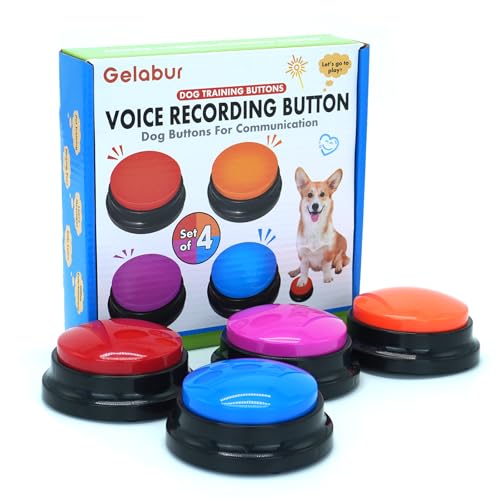
Gelabur Set of 4 Voice Recordable Dog Buttons

Educator Adjustable Finger Clicker (Red)

BARKIE Dog Training Kit with Treat Pouch & Whistle

ChunHee Dog Door Bell, 36 Sounds, Chew-Proof

ChengFu Peanut Butter Treat Dispenser Ball Toy
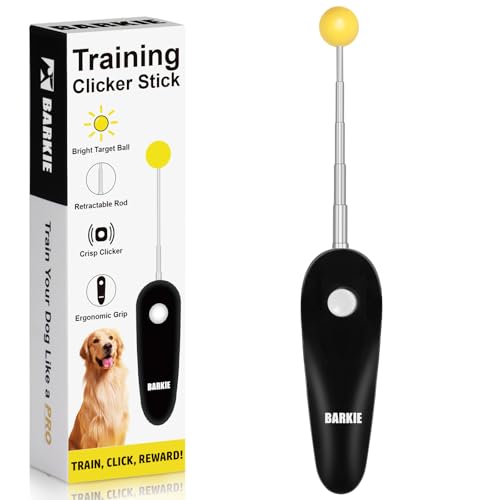
Dog Training Clicker with Retractable Target Stick
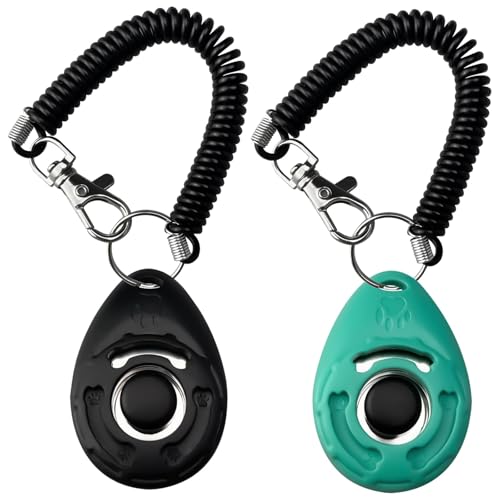
ABSONE Dog Clicker with Wrist Strap

Puppy Training Cards, 50 Stage-by-Stage Guide Cards
A Breakdown Of The Leading Choices
Most tools in this list help you talk to your dog; the Gelabur four-button set flips that around. You record short words like “outside” or “treat” onto each button, then reward your pup every time it presses one. It’s the same concept behind the viral talking-dog videos, and it works because dogs learn that pressing produces a result.
The learning curve is real. Expect weeks of modeling the behavior yourself before a puppy connects the dots, so this suits owners who enjoy slow, playful training rather than quick fixes.
Standout Benefits
- Four separate buttons let you assign distinct words instead of recycling one cue
- Voice recording means your dog hears a familiar voice, which tends to speed recognition
- Doubles as a classroom activity button, so it’s useful beyond pet training
- Gives quiet dogs a way to signal needs without barking or scratching at doors
Things To Consider
- Results depend heavily on consistent daily practice; sporadic use rarely produces pressing behavior
- You’ll want to wipe the buttons down regularly since noses and drool accumulate fast
Who Will Love This
Enrichment-minded owners with time for short daily sessions who want their dog to actively request things rather than guess.
A Better Fit Elsewhere
For straightforward potty signaling without any recording setup, the ChunHee dog door bell gets you there faster.
A clicker marks the exact moment your puppy does something right, bridging the gap between the behavior and the treat. The Educator finger clicker straps to your finger, which frees both hands for leash handling or luring. That single design choice matters more than it sounds when you’re also managing a lead, treats, and a pulling puppy.
Its compact body, roughly five inches long, disappears into a pocket between sessions. Owners commonly report the click is audible enough for indoor and backyard work while staying less startling than louder box clickers.
Where It Excels
- Finger mount keeps the clicker ready without occupying a hand
- Clear, consistent sound pairs cleanly with reward-based reinforcement
- Small footprint slips into pockets or treat pouches unnoticed
Minor Gripes
- The strap fit can feel loose on larger fingers until you adjust it
- One unit per household is realistic; misplacing a tiny clicker happens often
Made For
Owners running frequent short reinforcement sessions on walks who want their hands free for the leash.
Swap It Out When
If you’d rather have spare clickers scattered around the house, the ABSONE wrist-strap model covers that need cheaply.
New owners often buy three or four separate accessories in their first month and end up with mismatched gear. The BARKIE kit bundles the essentials into one grey package: an Oxford cloth waist bag, a silicone treat pouch, two wrist-strap clickers in dark green and black, an adjustable ultrasonic whistle with lanyard, a combined whistle-clicker, waste bags, and a starter manual.
The split between outer bag and inner silicone liner is the smart part. Treat grease stays contained in the washable liner instead of soaking into fabric, which is the complaint that kills most cheap pouches within weeks.
What Helps Most
- Silicone inner pouch rinses clean, protecting the Oxford cloth shell from residue
- Two clickers mean one lives in your pocket and one stays by the door
- Waist bag carries personal items alongside training supplies on longer outings
- Included booklet gives beginners a starting structure instead of guesswork
Points To Note
- Bundle quality varies piece to piece; the whistle may take tuning practice to find your dog’s frequency
- Grey fabric shows dirt on muddy park days and needs occasional washing
Feature Snapshot
Right Fit For
First-time puppy owners heading into outdoor obedience classes who want every core accessory in a single purchase.
Where A Sibling Pick Shines
Owners focused purely on agility targeting will get more mileage from the BARKIE clicker-and-target-stick combo further down this list.
Hanging jingle bells are the classic potty-training signal, but they share one flaw: every ring sounds identical. The ChunHee electronic bell fixes that with 36 selectable tones, adjustable volume up to 115dB, and a rugged housing built to survive chewing from strong-jawed breeds like Huskies and German Shepherds.
In multi-dog homes you can assign each animal its own tone, so you know who’s asking before you reach the door. Batteries ship included, rated for over a thousand rings, which covers months of typical use.
Points In Its Favor
- Different tones per dog remove guesswork in multi-pet households
- Heavy-duty build resists the chewing that destroys hanging bell straps
- Volume dial lets apartment dwellers keep alerts discreet
- Calming chime options add a secondary use for anxious pups
Worth Noting
- Battery replacement is inevitable; keep spares on hand once rings climb past the thousand mark
- Mounting near the door takes a few minutes and a suitable surface
Details At A Glance
Who Should Grab It
Owners mid-potty-training who want a durable, customizable signal instead of fabric bells their puppy can shred.
Consider Something Else When
Households wanting verbal communication beyond “outside” should look at the Gelabur recordable buttons instead.
Crate whining is where many puppy schedules fall apart. This ChengFu dispenser ball attacks the problem directly: spread peanut butter on the surface, stuff kibble inside, tie the 27-inch rope to the crate, and let your pup lick and nose the ball to earn every bite. Licking is naturally soothing for dogs, which is why this format calms faster than a plain toy.
The ball measures 2.8 inches and suits dogs up to 99 pounds, though smaller mouths manage it best. The elastic, non-toxic rubber stands up to determined chewers better than soft plush alternatives.
Where It Helps
- Rope tether keeps the toy inside the crate instead of rolling under furniture
- Licking action occupies a puppy through the first stretch of alone time
- Elastic, non-abrasive material handles biting without fraying like rope toys
- Works with kibble, spreads, or a mix depending on how long you need coverage
Softer Spots
- Peanut butter residue means regular washing; skip xylitol-containing spreads entirely
- Supervision is wise early on, as heavy chewers may eventually work at the rope knot
Quick Facts
Best Suited To
Owners working through crate acclimation whose puppies fuss during the first 15 to 30 minutes alone.
Reach For A Different Pick When
Your goal is active skill-building rather than calming; the BARKIE clicker-and-target stick drives structured lessons far better.
Target sticks teach a dog to touch its nose to a point, which becomes the building block for spins, heel positions, and agility obstacles. This BARKIE tool merges that stick with a crisp clicker in one comfortable handle, so marking and guiding happen with a single grip. The retractable shaft collapses for storage and extends when a session starts.
The oversized yellow tip is deliberate. Bright color catches a puppy’s eye across a yard, and the easy-press button keeps clicks consistent even mid-movement. Cats take to nose targeting with it too.
The Practical Payoff
- Combined design removes the juggle of holding a clicker and stick separately
- Retractable shaft fits drawers and training bags between sessions
- Large yellow target ball stays visible outdoors at distance
- Soft-grip handle stays comfortable through longer trick sessions
Small Caveats
- Retraction mechanism adds moving parts; a hard drop can affect smooth extension over time
- Overkill for owners who only plan basic sit-and-stay work
Feature Card
The Right Fit
Owners moving past basics into tricks, agility foundations, or multi-step behaviors with a young dog.
Another Choice May Suit
Anyone still teaching their first marker cue will find the simpler ABSONE clicker easier to start with.
Clicker training asks nothing more than a sharp, repeatable sound paired with food, and the ABSONE delivers exactly that without extras you don’t need yet. The click cuts through household noise consistently, which matters because timing precision is the entire skill. Dogs, cats, and even birds respond to the same cue.
The wrist strap solves the classic beginner problem of setting the clicker down and losing it mid-walk. Lightweight plastic construction shrugs off drops on pavement, and the whole thing weighs almost nothing in a jacket pocket.
Reasons It Performs
- Sharp, uniform sound supports precise timing from day one
- Wrist strap keeps it attached during walks and group classes
- Sturdy, featherweight body survives being dropped repeatedly
- Low commitment price makes trying clicker training painless
Things That May Matter
- No volume adjustment; sound-sensitive dogs may startle at first in quiet rooms
- Single unit, so ordering a backup is sensible once it becomes part of your routine
Who It Suits Best
Total beginners running their first marker-training sessions at home or in puppy class who want a no-frills starting point.
Not Your Match When
Once you add targeting and agility goals, stepping up to the BARKIE clicker-with-target-stick combo pays off.
Every other item here tells your dog what to do; these cards tell you. Fifty laminated cards map the road from eight weeks to two years, covering housetraining, crate routines, biting, socialization checklists, health milestones, and eventually advanced tricks. Weekly age-appropriate schedules answer the “what now?” question that dense training books bury in chapters.
The format is the advantage. At roughly 12 by 8.5 centimeters on a metal ring, the deck hangs by the back door or clips to a bag, and the water-resistant lamination shrugs off drool and rain at the park. A bonus clicker comes included, so day-one sessions can start immediately.
Where It Delivers
- Weekly structure removes decision fatigue during the hardest early months
- Laminated, drool-proof cards survive real puppy-household conditions
- Ring binding lets you pull just the current week’s cards
- Included clicker pairs directly with the card instructions
A Few Limitations
- Cards cover breadth over depth; stubborn behavior problems still call for a professional trainer
- Small text size may strain eyes in dim indoor light
Core Details
Built With In Mind
First-time owners who feel overwhelmed by conflicting online advice and want one clear weekly roadmap.
Look Elsewhere When
Experienced handlers who already know their training plan will get more value from the physical tools above, like the ChunHee door bell.
What Matters Most Before Choosing Puppy Training Tools
Match The Tool To The Behavior
Start with the specific problem keeping you up at night. Potty accidents point toward door bells; crate whining points toward licking dispensers; scattered confusion points toward structured guides. Buying broadly feels productive, but one well-used tool beats a drawer of unused ones.
Timing And Consistency Beat Features
A clicker only works when the click lands within a second of the behavior, and a door bell only teaches anything when every trip outside follows a ring. Choose tools you’ll actually reach for daily. Simpler designs tend to survive busy weeks better than feature-heavy ones.
Durability For The Chewing Years
Puppies explore with their teeth, and flimsy gear becomes a hazard or a casualty. Look for chew-resistant housings, laminated surfaces, and washable fabrics. Anything fabric-based should rinse clean, because treat residue builds up faster than most people expect.
Your Own Experience Level
Beginners benefit most from guided formats like card systems and bundled kits with manuals. Handlers with some background can skip straight to specialized gear such as target sticks or communication buttons and put them to work immediately.
Key Considerations Across These Picks
Traps First Timers Fall Into
The most common mistake is buying for the dog you hope to have instead of the puppy in front of you. An agility target stick won’t help a dog still having accidents indoors. Another trap: skipping the instruction booklet tucked inside kits, then blaming the whistle when it was never tuned. Read first, train second.
When Paying More Pays Off
Higher-priced items here justify themselves through materials and mechanics: chew-proof bell housings, waterproof silicone liners, retractable steel shafts. Those upgrades matter for strong breeds, multi-dog homes, or year-round outdoor use. For a calm small breed in a quiet apartment, budget basics usually hold up fine.
Frequently Asked Questions
When should I start using these tools with a new puppy?
Most marker-based tools like clickers work from the day your puppy comes home around eight weeks old. Communication buttons and target sticks benefit from a week or two of bonding first.
How long does clicker training take to show results?
Many puppies connect the click to a reward within a few short sessions. Reliable behavior on cue typically develops over several weeks of daily practice.
Are ultrasonic whistles safe for a puppy’s ears?
Yes, adjustable silent whistles operate at frequencies dogs hear clearly without the piercing volume of a referee’s whistle. Tune gradually and watch your puppy’s reaction.
Do I need multiple tools at once?
No, layering one tool at a time keeps training clear for both of you. Add a second aid once the first behavior is reliable.
Can older dogs use these products too?
Absolutely, adult and senior dogs learn marker cues, door bells, and target work readily. Adjust expectations for pace, not possibility.
Closing Thoughts
Building a training toolkit is really about matching gear to the moment you’re living through: the accident-heavy weeks, the crate-whining nights, the first off-leash recall. Start with one or two picks from this list that address your current headache, use them daily, and expand as your puppy grows. Consistency will do more for your dog than any single product ever could.
