

Tap water is convenient until you look at what’s actually in it. Chlorine, dissolved solids, and trace metals that your municipal supply treats as harmless can stress fish, stall coral growth, and fuel nuisance algae in a reef tank. A reverse osmosis system, which pushes water through a semi-permeable membrane to strip out those impurities, solves the problem at the source. The eight options below cover everything from a compact starter unit to a high-output under-sink setup, plus one accessory that makes any of them easier to live with.
The Main Contenders

Aquatic Life RO Buddie 3-Stage Aquarium Water Filter System, 50 GPD

LiquaGen 5-Stage RODI Aquarium Reef Water Filter System, 75 GPD

NU Aqua 4-Stage RODI Reverse Osmosis System 100 GPD

Geekpure 4 Stage Portable Reverse Osmosis Water Filtration System, 100 GPD
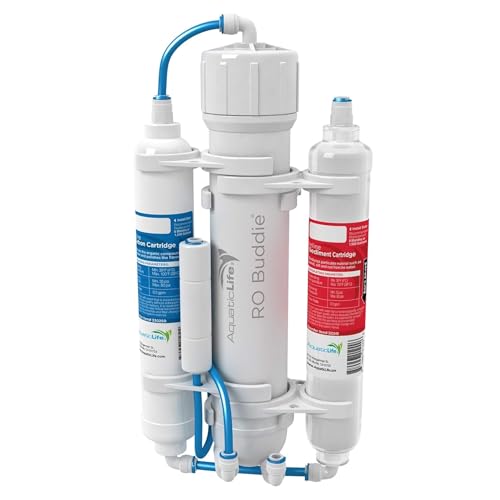
Aquatic Life RO Buddie 3-Stage Aquarium Water Filter System, 100 GPD

Geekpure 5 Stage Reverse Osmosis RO Drinking Water Filter System, 75 GPD
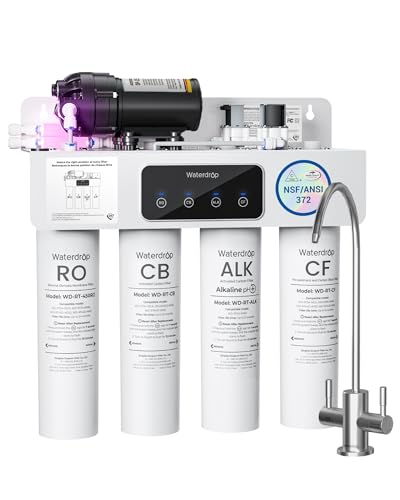
Waterdrop T4-A Alkaline Mineral Tankless Reverse Osmosis System

AquaticLife Auto Shut-Off Float Valve Kit for RO/RODI Units
Meet The Standout Selections
The RO Buddie is the unit most hobbyists picture when someone says “start here.” It hangs on a bucket or mounts under a sink, runs tap water through a sediment prefilter, a carbon block, and a 50-gallon-per-day membrane, and hands you water with most dissolved solids stripped out. That output rate fills a five-gallon change bucket in a couple of hours, which suits a modest freshwater tank or a nano reef.
Because it skips a deionization stage, it’s aimed at people who don’t need lab-grade zero TDS water yet. The honest read is that this is the least intimidating system in the category.
Strengths Worth Knowing
- Three-stage layout keeps cartridge swaps cheap and quick compared with longer filter chains.
- 50 GPD membrane covers routine weekly changes on tanks up to roughly 50 gallons without waiting all day.
- Compact housing tucks into a cabinet, a laundry room corner, or beside the stand.
- Works beyond aquariums, so humidifiers and fountains can share the same purified line.
Small Caveats
- No DI stage means trace TDS remains, which sensitive corals may notice.
- Membranes need flushing after idle periods, a chore owners of any RO unit should expect.
Who It Suits Best
First-time aquarium keepers running freshwater community tanks who want clean water without a steep learning curve.
Where A Sibling Pick Shines
Reef keepers chasing zero TDS will get more from the LiquaGen 5-Stage RODI, whose deionization stage polishes what the membrane leaves behind.
Where the RO Buddie stops at the membrane, the LiquaGen keeps going. Its fifth stage is a deionization resin cartridge, the component that catches whatever ions slip past reverse osmosis and drives total dissolved solids down to zero. For sps corals and mixed reefs, that final polish matters more than raw flow rate ever will.
The 75 GPD rating splits the difference between patience and practicality, filling a 30-gallon mixing barrel overnight. Filters ship included, so the unit is ready to plumb in on arrival rather than needing a separate parts order.
Reasons It Performs
- Full RODI chain delivers zero-TDS water suitable for the most demanding saltwater livestock.
- Pre-assembled stages cut installation down to connecting tubing and a source line.
- 75 GPD output balances speed against membrane longevity for mid-size systems.
- Cartridges are standard sizes, so replacements stay easy to source over the years.
Points To Note
- Five cartridges mean five replacement schedules to track, more upkeep than a three-stage unit.
- DI resin exhausts fastest in areas with very hard source water, adding recurring cost.
At A Glance
Made For
Intermediate to advanced reef keepers who mix their own saltwater and want consistent zero-TDS results every batch.
Consider Something Else When
Freshwater-only keepers can save money and maintenance with the Aquatic Life RO Buddie 50 GPD, since its simpler three-stage design covers non-reef needs well.
Support is the quiet differentiator in this category, and NU Aqua leans into it hard. The company backs this four-stage RODI unit with an extended manufacturer coverage period and long-term support access, which takes some anxiety out of owning plumbing that lives under pressure. Compared with the LiquaGen’s five stages, you trade one prefilter position for a faster 100 GPD membrane.
In practice that output means a serious water-change day stops being an all-day affair. Planted tank keepers dosing fertilizers also benefit from the predictable blank slate RODI provides.
What Earns Its Place
- 100 GPD membrane halves fill times versus 50 GPD starter units like the RO Buddie.
- Four-stage RODI design still reaches polished, low-TDS output for sensitive setups.
- Extended manufacturer coverage and ongoing support reduce ownership risk.
- Standard 10-inch cartridges keep future filter orders simple.
Honest Caveats
- Higher flow rates consume source water faster, worth factoring where water bills run high.
- You’ll still want a TDS meter to track when the DI stage tires out.
Quick Facts
Right Fit For
Planted tank and soft-water enthusiasts running 40-plus gallon systems who value responsive support alongside solid output.
Swap It Out When
Apartment dwellers who move often will find the Geekpure 4 Stage Portable system easier to pack up and reconnect elsewhere.
Most RO systems assume a permanent home under your sink. This Geekpure doesn’t. Its four-stage frame is built to travel, connecting to a faucet adapter at a rental, an RV park hookup, or a boat dock, then packing back down when you leave. Breeders who show fish, snowbirds with winter tanks, and anyone between houses will recognize the appeal immediately.
The 100 GPD rating matches the NU Aqua above, so portability costs you nothing in throughput. Sediment and carbon prefilters protect the membrane from the variable tap quality you meet on the road.
Everyday Perks
- Portable format connects to standard faucets without permanent plumbing modifications.
- 100 GPD output keeps pace with fixed installations despite the travel-friendly size.
- Four stages handle sandy, silty, or heavily chlorinated source water encountered while traveling.
- Doubles as a drinking-water purifier wherever you set it up.
Things To Consider
- No deionization stage, so reef-grade zero TDS requires adding a DI canister later.
- Frequent disconnects and reconnects mean checking fittings for wear more often than a fixed unit.
Built With In Mind
RV owners, traveling breeders, and renters who need purified water without drilling or permanent installation.
Another Choice May Suit
Households wanting one system for both the aquarium and the kitchen sink will prefer the Geekpure 5 Stage under-sink model with its storage-tank design.
This is the same beloved RO Buddie platform as our first pick, turned up. The membrane doubles to 100 gallons per day, which changes the ownership math noticeably: a 29-gallon change barrel fills before lunch instead of by evening. Multiple-tank households, turtle keepers doing heavy top-offs, and anyone running auto water-change systems will feel the difference weekly.
You keep the simple three-stage cartridge layout, so maintenance stays beginner-level even as capacity grows. The trade-off mirrors every higher-flow membrane: somewhat faster exhaustion if your source water is hard.
Good Reasons To Consider
- 100 GPD output supports multi-tank fish rooms and aggressive change schedules.
- Familiar three-stage design keeps replacement cartridges affordable and swapping tool-free.
- Same compact mounting flexibility as the smaller RO Buddie.
- Handles humidifiers, fountains, and other household uses off the same line.
Worth Noting
- Still no DI stage, so saltwater keepers needing zero TDS should look at dedicated RODI units.
- Hard-water homes may see shorter membrane life at this flow rate.
Who Will Love This
Fish-room operators and multi-aquarium households that outgrew a 50 GPD starter but don’t need deionization.
Reach For A Different Pick When
Reef hobbyists wanting that extra polishing stage should step up to the NU Aqua 4-Stage RODI, which pairs similar output with deionization.
Not every RO purchase starts at the fish tank. This Geekpure is designed first as a whole-household drinking water system, complete with a pressurized storage tank and a dedicated faucet, and it happens to serve aquarium duty beautifully. Five stages reduce heavy metals and other contaminants down to a fraction-of-a-micron filtration level, and the bundle includes seven spare filters, stretching the time before your first reorder.
For families, that means coffee, ice, baby formula prep, and fish water all come from one point. The push-fit tubing keeps installation approachable for a confident DIY afternoon.
The Upside
- Serves both kitchen and aquarium from a single under-sink installation.
- Seven spare filters included, delaying your first consumables order considerably.
- Storage tank provides on-demand flow at the faucet rather than slow trickle fills.
- Push-fit quick connections simplify assembly for first-time installers.
Details To Watch
- Storage tank consumes significant cabinet space, tighter fit than hang-on units.
- Requires drilling a hole for the dedicated countertop faucet.
Feature Rundown
Who Should Grab It
Households that drink filtered water daily and keep one or two aquariums, wanting a single system to do both jobs.
Not Your Match When
Renters avoiding countertop drilling should choose the portable Geekpure 4 Stage unit instead, since it needs no permanent fixture.
The T4-A plays in a different league entirely. It’s tankless, meaning purified water is made on demand rather than stored, and it pushes up to 450 gallons per day through ten filtration stages. A 2:1 pure-to-drain ratio sends far less water down the waste line than traditional membranes manage, which matters on large systems and high water bills alike.
The dual-flow faucet lets you switch between standard RO water and a mineral-enhanced alkaline stream, handy for drinking while keeping plain RO available for mixing salt. One caveat deserves attention: the faucet install involves cutting a countertop hole, and the unit plugs in, so plan your outlet placement.
Everyday Wins
- 450 GPD capacity serves big households and serious fish rooms simultaneously.
- 2:1 pure-to-drain ratio cuts wastewater substantially versus conventional RO membranes.
- Tankless body frees up the entire under-sink cabinet.
- Dual-stream faucet separates mineralized drinking water from straight RO for tank use.
- NSF/ANSI 372 listing addresses material safety standards for the wetted components.
Factors To Consider
- Needs a power outlet under the sink, unlike passive systems on this list.
- Countertop drilling for the faucet deters renters and finished-stone counters.
- Overkill for a single small tank, both in cost and complexity.
Core Details
Whose Shelf It Belongs On
Owners of large display tanks or fish rooms who also want premium drinking water and have a powered under-sink spot ready.
Look Elsewhere When
Budget-conscious beginners setting up their first 20-gallon tank will be better served by the Aquatic Life RO Buddie 50 GPD.
This last entry isn’t a filtration system at all, and that’s the point. The float valve kit turns any RO or RODI unit into a hands-off filling machine: mount the valve in your reservoir or sump, run the product water line to it, and the valve closes automatically once the water level rises. Production stops, no overflow, no forgotten hose running overnight onto the floor.
Anyone who has ever flooded a fish room during a distracted top-off understands why this kit earns its place here. Installation uses quarter-inch lines matching most hobby systems, including the Aquatic Life and LiquaGen picks above.
Practical Advantages
- Automatically halts production when the reservoir hits your chosen level.
- Enables unattended top-offs and bulk water storage without overflow risk.
- Quarter-inch fittings match the tubing used by most hobby RO systems.
- Simple mechanical operation, nothing electronic to fail or configure.
Points To Keep In Mind
- Float mechanisms benefit from occasional rinsing, since mineral film can affect seating over time.
- Only useful alongside a compatible RO unit, not as a standalone item.
The Right Fit
Busy reef and planted tank keepers running automatic top-off reservoirs who want refill cycles handled without supervision.
Skip It When
Someone without an existing RO system gains nothing here yet; start with the Aquatic Life RO Buddie 100 GPD and add this kit afterward.
What Matters Most Before Choosing Ro Systems For Aquarium
Match Output To Your Change Routine
Gallons per day sounds abstract until you translate it into buckets. A 50 GPD membrane fills a five-gallon change container in roughly two hours, while 100 GPD does it in about one. Count how many gallons you replace weekly, add your top-off volume, and buy headroom rather than exact capacity. Undersizing means standing around waiting; oversizing mostly costs money and wastes source water.
Decide Whether You Need Deionization
RO alone removes the majority of dissolved solids, typically leaving a small residual reading on a TDS meter. Deionization resin catches that remainder and drives readings to zero. Freshwater community tanks usually thrive on plain RO remineralized to taste. SPS-dominant reefs, shrimp breeding projects, and delicate planted aquascapes reward the extra stage. Adding a DI canister later is always possible, so starting simple rarely locks you in.
Plan The Physical Install
Passive hang-on units need only a source connection and a drain path for wastewater. Under-sink systems with storage tanks demand cabinet space, a faucet hole, and sometimes an outlet for powered models like the Waterdrop T4-A. Measure before ordering, and check whether your countertop material tolerates drilling.
Budget For Consumables
The purchase price is only the opening bid. Prefilters swap every few months, membranes annually or two, and DI resin whenever your meter creeps above zero. Homes with hard source water burn through everything faster, so factor local water hardness into your true cost of ownership.
Key Considerations Across These Picks
Traps First Timers Fall Into
The classic mistake is buying on flow rate alone and ignoring what your livestock actually needs. A second trap is skipping the TDS meter, leaving you guessing when cartridges expire. Others forget about wastewater routing entirely, then discover their drain is nowhere near the tank. Sketch the full path from tap to tank before anything ships.
What Separates Premium From Basic
Higher-tier units spend money on efficiency and convenience: better pure-to-drain ratios, tankless on-demand delivery, dual output streams, and longer-lived membranes. That engineering pays off in homes running hundreds of gallons monthly. Below that volume, a basic three-stage unit delivers nearly identical water quality for a fraction of the investment.
Frequently Asked Questions
Do I really need an RO system for a freshwater aquarium?
Many municipal supplies carry chlorine and dissolved solids that fish tolerate poorly over time. An RO unit gives you a consistent, controllable baseline you can remineralize precisely.
How often do filters and membranes need replacing?
Prefilters generally swap every few months, DI resin whenever TDS readings rise above zero, and membranes roughly yearly depending on source water. Hard water shortens every interval.
What does GPD mean in practice?
Gallons per day measures production speed under ideal conditions. A 100 GPD unit fills a five-gallon bucket in about an hour, assuming reasonable tap pressure and temperature.
Can one system serve both my family and my fish tank?
Yes, and several picks here are built for exactly that. Just dedicate a separate line or container for aquarium water so drinking and tank needs never compete.
Is zero TDS water safe to add directly to a tank?
Pure RO or RODI water lacks the minerals fish and plants need, so remineralize before it enters the aquarium. Never top off a tank with untreated RO water except for evaporation replacement in carefully managed setups.
Closing Remarks
Choosing among these ro systems for aquarium setups comes down to honesty about your own routine. Small freshwater tanks thrive on the simple RO Buddie, reefs deserve the full RODI treatment, travelers need the portable Geekpure, and busy households may find the Waterdrop pays for itself in saved time. Add the float valve kit once any system is running, and water changes stop being a chore you dread.
