

Saltwater tanks punish weak filtration fast. A film of protein on the surface, a sponge clogged with waste, a canister that can’t keep up with a heavy bioload, each one shows up in water clarity within days. This roundup covers eight filters built to handle marine conditions, from compact internal units to a full-size canister workhorse. Whether you run a 20-gallon nano reef or a 200-gallon display, there’s a fit here for your setup and your maintenance style.
The Lineup, Simplified

TARARIUM Turtle Tank Filter 290GPH 20-75 Gal

TARARIUM 290GPH Turtle Tank Filter 20-85 Gallon

TARARIUM Fish Tank Filter 400GPH 75-200 Gallon
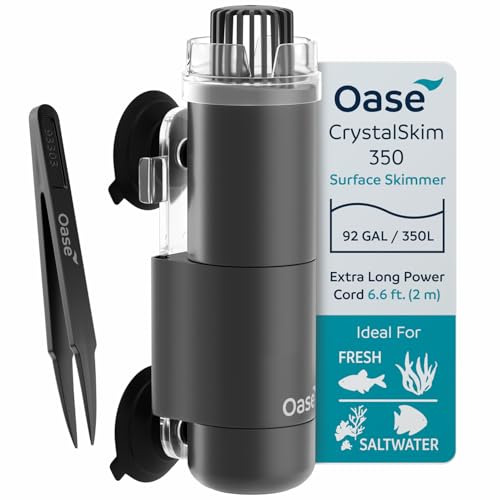
OASE CrystalSkim 350 Surface Skimmer
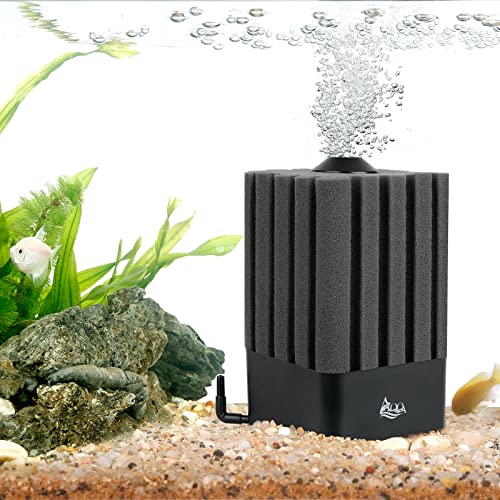
AQQA Aquarium Sponge Filter 20-110 Gallon

Coralife Marine Salt Water Filter and Protein Skimmer

Fluval FX2 High Performance Canister Aquarium Filter

TARARIUM Aquarium Filter 700GPH 100-400 Gallon
Taking A Closer Look At The Options
Shallow tanks are the hardest place to run a filter, since most intakes need several inches of water just to prime. This TARARIUM unit is rated for 20 to 75 gallons at 290 GPH and pulls from low water levels, which makes it a natural match for turtle enclosures and paludariums where the waterline sits well below the rim.
The three-stage layout pairs a dense double-sided mesh sponge with ceramic bio-balls, the porous media where beneficial bacteria colonize and break down ammonia. A waterfall-style return adds surface agitation, which helps gas exchange in saltwater setups. You can dial the flow down too, handy for slower swimmers or freshly aquascaped tanks.
What It Does Well
- Runs at genuinely low water levels, so partial evaporation won’t leave the pump running dry between top-offs
- Ceramic bio-ball stage gives bacteria a large surface area, supporting stable biological filtration in stocked tanks
- Adjustable output lets you soften current for shrimp, frogs, or juvenile fish without swapping hardware
- Waterfall return oxygenates the surface column, a quiet bonus for marine systems that need gas exchange
Things To Consider
- The sponge stage needs regular rinsing in removed tank water; owners commonly report debris buildup within a couple of weeks in messy reptile tanks
- Internal placement means the whole unit lives inside your display, so plan hiding spots around hardscape
Key Specs
Who It Suits Best
Hobbyists running shallow turtle, frog, or mixed-species tanks who want dependable filtration without external plumbing.
A Better Fit Elsewhere
Larger displays over 75 gallons are better served by the TARARIUM 700GPH model later in this list, which moves far more water per hour.
Where the first TARARIUM tops out at 75 gallons, this sibling stretches the same 290 GPH pump across tanks up to 85 gallons. The bottom-mounted suction design pulls waste off the substrate line, which matters in turtle and amphibian setups where debris settles fast and stays put.
It combines circulation, mechanical removal, and oxygenation in one submersible body, and the manufacturer lists a minimum water depth of just 2.6 inches. That figure is worth pausing on: even heavily evaporated tanks stay within operating range. Flow is adjustable, so you can tune current for saltwater fish that dislike strong wash or for bottom-dwellers that prefer calm zones.
Positive Takeaways
- Operates at a 2.6-inch minimum water level, giving you real slack during hot spells when evaporation runs high
- Bottom suction lifts settled waste instead of letting it rot in the substrate
- Works across freshwater, saltwater, and murky water applications, useful if you keep both types
Small Caveats
- At 290 GPH across an 85-gallon rating, turnover is modest for demanding reef loads; heavier stocking may want more headroom
- Media access requires pulling the unit from the tank, a chore some owners mention during weekly maintenance
Right Fit For
Keepers of mid-size turtle or community tanks who want one filter to cover a wide gallon range with minimal fuss.
Swap It Out When
Aquarists prioritizing biological capacity over raw reach may prefer the Coralife skimmer combo, which adds protein extraction these internal units lack.
Step up to serious volume and this 400 GPH submersible takes over, covering tanks from 75 to 200 gallons plus small ponds and fountains. The wave-maker function sets it apart from the smaller TARARIUM units above: beyond filtering, it pushes directional current, which saltwater systems rely on to keep detritus suspended and corals fed.
A transparent housing lets you see the black sponge darkening as it traps waste, so you know when to rinse without guessing. Three-stage deep filtration handles the mechanical load while circulation keeps the whole column moving. In a busy 125-gallon display, that visibility alone saves you from opening the unit on a schedule whether it needs it or not.
Positive Points
- Clear housing shows sponge loading at a glance, turning maintenance into a visual check rather than a calendar task
- Integrated wave-maker adds current control that most internal filters skip entirely
- Handles tanks up to 200 gallons, rare territory for a submersible design at this size
- Reduced water-change frequency is a commonly reported benefit once the three-stage system beds in
Points To Note
- High output means audible pump noise in quiet rooms; placement against soft padding helps
- The larger body demands open floor space inside the tank, tighter quarters may feel crowded
Feature Snapshot
Who Will Love This
Owners of 100-plus gallon saltwater or pond-style systems who want filtration and current generation from a single device.
Reach For A Different Pick When
Nano reef keepers should look at the OASE CrystalSkim 350 instead, whose surface-focused design suits smaller volumes far better.
Protein film is the silent clarity killer in marine tanks. That oily layer blocks oxygen exchange at the surface and scatters light, and no amount of substrate vacuuming removes it. The German-built CrystalSkim 350 targets exactly that layer, drawing biofilm, floating plant matter, and dust off the top inch of water in tanks up to 92 gallons.
OASE rounds out the design with a bottom outlet that stirs stagnant low-flow zones, plus a removable collection basket that shields small fish and shrimp from the intake. Adjustable flow and a reputation for near-silent operation make it easy to live with in a bedroom or office setting. Compared with the bulkier TARARIUM internals, this one nearly disappears into the aquascape.
What Pays Off
- Removes surface biofilm continuously, restoring oxygen exchange that film otherwise suffocates
- Shrimp-safe collection basket protects tiny livestock, a genuine concern with standard intakes
- Bottom outlet improves circulation in dead spots, addressing two problems in one compact body
- Adjustable flow suits both gentle nano setups and busier mixed reefs
Less Ideal Details
- It’s a surface specialist, not a full biological filter; pair it with existing media rather than replacing your main system
- The collection basket needs emptying every few days in heavily stocked tanks, per widely reported owner routines
Best Suited To
Marine and planted-tank keepers fighting persistent surface film who already have biological filtration in place.
Another Choice May Suit
Full-filtration seekers starting from scratch will get more complete coverage from the Fluval FX2 canister covered below.
Sponge filters are the old-school answer to fragile livestock, and this AQQA unit keeps the formula intact. An external air pump (sold separately) drives water through a vertical-pattern sponge, trapping particles while the foam itself becomes a massive bacterial colony. There’s no impeller to injure fry and no strong intake to swallow baby shrimp.
The trade-off is upfront planning: you’ll need a suitable air pump and 4mm airline tubing matched to your tank size before this runs. Once set up, though, it’s about as forgiving as filtration gets. Rinse the sponge occasionally in removed tank water, never tap water, and the bacterial colony stays intact for years.
Where It Delivers
- Gentle, air-driven flow protects bettas, fry, and shrimp that powered intakes routinely harm
- Whisper-quiet operation works in bedrooms and offices where motor hum gets old fast
- The sponge doubles as a grazing surface, which shrimp colonies tend to colonize happily
Worth Noting
- An air pump and 4mm hose are required purchases, so budget for them alongside the filter itself
- Mechanical polishing is limited compared with cartridge or canister systems; cloudy water clears slowly
Made For
New keepers and breeding setups running quarantine, fry-grow-out, or shrimp tanks where safety beats raw power.
Not Your Match When
Large display tanks needing strong turnover belong with the TARARIUM 700GPH unit, which moves several times the water volume.
Here’s the only unit on this list built specifically for saltwater chemistry. A protein skimmer strips dissolved organic waste before it decomposes, using microbubbles that push organics into a collection cup. This Coralife combines that skimming action with conventional filtration in one body sized for tanks up to 30 gallons.
The needle wheel impeller on the motor chops air finely, which is what makes skimming effective, and an adjustable dial controls bubble volume. A removable cup empties in seconds, and replaceable carbon and phosphate cartridges handle chemical polishing. For a small reef, having all three filtration types in one footprint is genuinely convenient.
Good Reasons To Consider
- True protein skimming removes dissolved organics that mechanical media simply cannot touch
- Needle wheel impeller produces fine bubbles, the key to efficient waste extraction
- Carbon and phosphate cartridges add chemical control for algae-prone small reefs
- Quick-empty collection cup turns a messy chore into a ten-second rinse
Some Limits To Know
- Capped at 30 gallons, so growing reefs will outgrow it quickly
- Cartridges are recurring consumables; factor replacement media into long-term ownership costs
- Skimmers need a tuning period, and new owners commonly spend a week or two dialing in bubble levels
Core Details
The Right Fit
Nano reef enthusiasts under 30 gallons who want dedicated marine waste extraction without separate equipment.
Look Elsewhere When
Fish-only saltwater tanks without coral often do fine with the simpler AQQA sponge filter, skipping skimmer tuning altogether.
The FX series has earned its “workhorse” reputation among serious aquarists, and the FX2 carries that lineage forward. Everything sits outside the tank in a pressurized canister, sweeping water hard enough to retain far more debris than internal units manage. Multi-stage media trays use a basket-in-basket arrangement, so you stack mechanical, biological, and chemical layers without wasting vertical space.
Two features stand out for daily ownership. SMART PUMP technology monitors performance and adjusts output to maintain consistent flow, while auto start/stop refills the canister after maintenance so you’re never hand-priming siphons. There’s also a built-in powered water change system that drains and refills the tank through the filter’s plumbing. Compared with everything else here, this is the option you buy once and service for years.
Practical Advantages
- Basket-in-basket trays hold generous media volume, extending time between full cleanouts
- Auto start/stop eliminates priming, the single most complained-about step with traditional canisters
- Powered water changes route drain-and-fill through the unit, cutting a 45-minute chore dramatically
- SMART PUMP self-adjustment keeps flow steady as media loads up between services
Trade Offs To Consider
- Canister ownership means periodic disassembly and seal care; neglect leads to leaks some owners report over long service
- External plumbing and cabinet space are required, ruling out minimalist or open-stand setups
Technical Highlights
Whose Shelf It Belongs On
Committed large-tank keepers who view filtration as long-term infrastructure and don’t mind a learning curve.
Consider Something Else When
Apartment dwellers without cabinet space will find the submersible TARARIUM 400GPH far easier to accommodate.
At the top of the TARARIUM range sits this 700 GPH monster, rated for tanks from 100 all the way to 400 gallons plus small ponds. Nearly double the flow of the 400GPH sibling reviewed earlier, it’s aimed at keepers whose bioload outruns ordinary internal filters: large cichlid displays, monster fish setups, outdoor fountains.
The same transparent housing trick applies here, letting you watch the black sponge load up with waste before committing to a rinse. Three-stage deep filtration and wave-maker circulation round out the package, moving enough water to keep even long tanks from developing stagnant ends. For sheer volume per dollar, few submersibles compete in this bracket.
Everyday Perks
- 700 GPH delivers serious turnover that keeps very large tanks clear between water changes
- Visible sponge loading takes the guesswork out of rinse timing
- Wave-maker function doubles as current generation for big marine displays
- Submersible install avoids any external plumbing, unlike canister alternatives
Factors To Weigh
- Strong output generates noticeable vibration; owners commonly pad mounting points in living spaces
- Physical size demands a roomy tank floor, and it will dominate a smaller aquascape visually
The Numbers That Matter
Who Should Grab It
Keepers of 150-gallon-plus fish-only or predator tanks who need maximum flow without canister complexity.
Where A Sibling Pick Shines
Tanks under 100 gallons are better matched to the TARARIUM 400GPH, which costs less and fits more discreetly.
What Matters Most Before Choosing Saltwater Aquarium Filters
Match Flow To Your Bioload
Turnover rate, meaning how many times the full tank volume passes through filtration per hour, drives everything else. Fish-only marine systems typically tolerate moderate flow, while reef tanks with corals demand both strong filtration and strong current. A 90-gallon display with heavy feeding needs far more capacity than the same tank lightly stocked, so size up rather than down when in doubt.
Decide Between Internal And External
Internal filters like the TARARIUM units install in minutes and hide inside the aquascape, but they eat display space and require reaching into the tank for service. Canisters such as the Fluval FX2 live outside, hold far more media, and clean faster, yet they demand cabinet space and plumbing patience. Your stand and your tolerance for maintenance shape this choice more than brand loyalty does.
Saltwater-Specific Needs
Marine systems generate dissolved organic waste that mechanical media ignores entirely. That’s why protein skimming, the microbubble process that extracts organics before they break down, matters so much in reef keeping. Surface film removal, as the OASE handles, also protects oxygen exchange. Skipping these layers in saltwater usually shows up as algae problems within months.
Key Considerations Across These Picks
Traps First Timers Fall Into
Undersizing is the classic error: a filter rated exactly at your tank volume leaves zero margin for a growing bioload. New keepers also rinse media under tap water, which chlorinates and kills the bacterial colony doing the real work. Always clean sponges in discarded tank water.
What Separates Premium From Basic
Higher-tier units buy automation and capacity: self-priming pumps, smart flow adjustment, larger media baskets, and quieter motors. Those features cost more upfront but cut weekly maintenance time sharply. Casual keepers rarely need them; dedicated large-tank hobbyists usually wonder how they managed without.
Frequently Asked Questions
How often should a saltwater aquarium filter be cleaned?
Rinse mechanical media every two to four weeks in removed tank water. Biological media needs attention only when flow visibly drops.
Can a freshwater filter be used in a saltwater tank?
Many can, provided the materials resist corrosion. Always confirm the manufacturer rates the unit for marine use before installing it.
Do I still need a protein skimmer with a good filter?
For reef tanks, yes, because skimmers remove dissolved organics that no mechanical media can capture. Fish-only systems can often skip one.
What does GPH mean when sizing a filter?
GPH stands for gallons per hour, the volume of water the pump moves. Aim for total turnover matching your system’s stocking demands.
Where should an internal filter sit in the tank?
Place it low and opposite your heater so filtered water distributes evenly. Avoid burying the intake in substrate or wedging it behind rockwork.
Closing Thoughts
Every tank on this list has a clear match. Shallow reptile and turtle setups lean toward the TARARIUM 290GPH options, nano reefs benefit from the Coralife skimmer combo, and large displays justify either the Fluval FX2 or the 700GPH TARARIUM depending on how much maintenance you want to automate. Start by measuring your tank honestly, then pick the filter sized one step above it. Your water clarity will thank you within the first week.
