

An unrestrained dog in a moving car is a distraction waiting to happen, and a hard brake turns a loose pet into a projectile. A good seat belt keeps your dog anchored to one spot, protects them from sudden stops, and lets you focus on the road instead of the back seat. The eight options below cover chewers, escape artists, multi-dog households, and everyday commuters alike.
A Closer Look At The Lineup

Mighty Paw Chew-Proof Dog Seat Belt

HCYPCV Adjustable Dog Car Seat Belt (Floral)

SlowTon Dog Car Harness & Seatbelt (B M)

Plutus Pet Dog Seat Belt with Elastic Bungee

Frskcssd 2-Pack Dog Car Seat Belt
SlowTon Dog Car Harness & Seatbelt (R M)
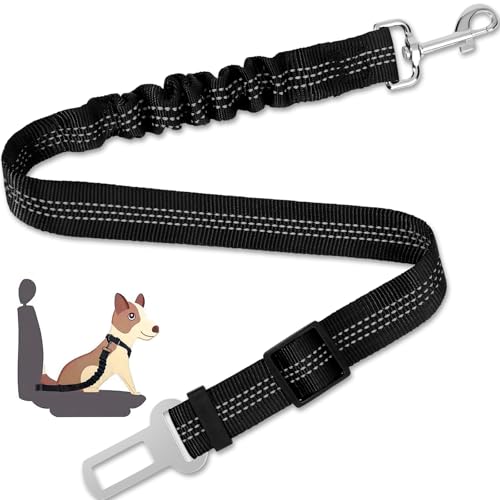
NCMAMA Adjustable Dog Seatbelt for Vehicle

PetBonus Durable Rope Dog Car Harness
The Strengths Of Each Pick
Most fabric lanyards last about a week against a determined teething puppy. This one swaps webbing for braided steel cable, so gnawing gets your dog nowhere. The latch bar attachment works like a child’s car seat anchor, which means no fiddling with buckle sockets that may not fit your vehicle.
The aviation aluminum carabiner at the dog’s end is rated strong enough for climbing use, and owners of pullers report it holds up under real strain. You get both buckle and headrest attachment styles depending on your car’s layout.
Strong Points
- Braided steel construction survives teething puppies that destroy fabric belts within days.
- Latch bar mounting mimics child-seat anchors, giving a firm hold independent of your car’s buckle design.
- Aviation-grade aluminum carabiner handles strong pullers without bending or slipping open.
- Headrest attachment option covers vehicles where buckle access is awkward.
Things To Consider
- The steel cable has zero stretch, so pairing it with a well-fitted harness rather than a collar matters for comfort during hard braking.
- A fixed-length setup offers less freedom of movement than adjustable lanyards like the HCYPCV below.
Key Specs
Who It Suits Best
Puppy owners and anyone whose current belt shows teeth marks after every ride.
Where A Sibling Pick Shines
Gentle riders who want more give should look at the Plutus Pet bungee model instead, since its elastic buffer absorbs jolts this rigid cable cannot.
Where the Mighty Paw locks into a fixed length, this HCYPCV lanyard slides from 20 inches up to 33, so a Chihuahua can sit tight while a beagle stretches out. That range is the whole appeal here. One belt covers multiple pets or grows with a young dog.
The floral print is a nice touch if aesthetics matter in your cabin, and the universal design drops into any car, truck, or SUV buckle. A 360-degree swivel at the clip lets your pet rotate from sitting to lying down without twisting the strap into knots.
What Pays Off
- Adjustable strap spans 20 to 33 inches, fitting everything from toy breeds to mid-size dogs.
- Swivel buckle prevents tangling as your pet changes position on longer drives.
- Universal fit works across sedans, trucks, and SUVs without adapters.
- Suits cats as well as dogs, which few belts in this list can claim.
Small Caveats
- Fabric webbing is not chew-proof, so persistent gnawers will work through it eventually.
- You may find the lighter build less reassuring with heavy pullers than steel-cable options.
Made For
Owners of small dogs or cats who want one affordable, adjustable belt shared across pets and vehicles.
Swap It Out When
Strong chewers belong on the Mighty Paw steel-cable belt, which shrugs off the teeth damage this fabric strap would accumulate.
This SlowTon kit solves the problem most lanyards ignore: what happens when your car’s buckle socket refuses to cooperate. The upgraded connector includes a lockable, tangle-free carabiner that hooks onto a latch bar or headrest rod whenever the traditional belt path does not fit. You are never stuck without an anchor point.
Because it pairs a full harness with the tether, force spreads across the chest instead of concentrating at the neck. In daily commuting, that difference shows up as less coughing and straining at red lights compared to collar-attached setups.
Strengths Worth Knowing
- Two-in-one design bundles harness and seatbelt, spreading braking force across the body.
- Lockable carabiner attaches to latch bars or headrest rods when buckle sockets do not match.
- Nylon strap with mesh fabric panels balances strength against breathability on warm drives.
Points To Note
- Harness sizing needs careful measuring before ordering, since a loose fit undermines the whole system.
- More adjustment points mean a slightly longer setup routine each trip than a simple clip-in lanyard.
Feature Snapshot
Right Fit For
Drivers whose vehicle buckles have proven incompatible with standard pet belts and who want full-body restraint anyway.
Another Choice May Suit
Anyone happy with a plain lanyard and a compatible buckle will find the NCMAMA simpler and quicker to clip in each morning.
Rigid tethers stop a dog abruptly, and that jolt lands right on the neck. Plutus Pet builds an elastic bungee section into its strap, so a sudden brake decelerates over a few extra inches instead of all at once. For anxious passengers who lurch at every lane change, that cushioning makes rides noticeably calmer.
The length adjusts between 25 and 32 inches, covering small pups through larger breeds, and a sturdy carabiner clips directly to the harness for a connection that will not pop loose mid-trip.
The Value In It
- Elastic bungee buffer absorbs shock from hard stops, easing strain on your dog’s neck.
- 25-to-32-inch adjustment range suits everything from small companions to bigger breeds.
- Carabiner fastening holds firmly to the harness through unexpected movements.
Worth Noting
- The elastic section adds slight slack, which some owners prefer to eliminate for very wiggly dogs.
- Webbing still needs a periodic check for fraying near the clip, a common wear point across all fabric belts.
Who Will Love This
Nervous riders and senior dogs who need gentler deceleration than a fixed-length steel or nylon tether provides.
Reach For A Different Pick When
Escape-prone chewers need the Mighty Paw braided-steel belt, whose cable gives them nothing to work through.
Two dogs in the back seat usually means buying two belts, but this Frskcssd pack ships a pair in one go. Each unit is a three-in-one design: clip it into a standard seat belt buckle, mount it on the headrest, or use whichever anchor your vehicle offers. Flexibility like that covers nearly any cabin layout.
High-density nylon forms the strap, reflective stitching runs along its length for low-light visibility, and a zinc alloy swivel at the clip keeps the line twist-free as your dog shifts around.
Useful Highlights
- Two-pack pricing equips a two-dog household from a single purchase.
- Three mounting modes handle buckle, headrest, or alternate anchor points across most vehicles.
- Reflective stitching improves visibility during night driving or tunnel transit.
- Zinc alloy swivel buckle resists tangling through position changes.
Less Ideal Details
- Nylon webbing remains vulnerable to determined chewers despite the dense weave.
- Elastic buffer sections add mild give that precision-minded owners may find too loose.
Quick Facts
Who Should Grab It
Households running two calm-to-moderate dogs who want dependable restraint without paying twice.
Not Your Match When
Single-dog owners wanting a harness-based system will get better body support from either SlowTon model on this list.
This is the same proven SlowTon platform as the earlier B M entry, sized differently for larger frames. The lockable, tangle-free carabiner still hooks to a latch bar or headrest rod whenever a conventional buckle socket will not cooperate, and the nylon-and-mesh harness spreads stopping force across the torso rather than the throat.
For big breeds, that load distribution is not a luxury. A 70-pound dog hitting the end of a neck-anchored tether generates serious force, and owners of large breeds commonly report that chest-mounted systems simply behave better over years of daily driving.
The Helpful Details
- Lockable carabiner offers latch bar and headrest mounting when buckle compatibility fails.
- Harness-and-tether pairing distributes braking loads across the chest for heavier dogs.
- Nylon strap with mesh panels holds up to daily use while keeping the coat ventilated.
Factors To Consider
- Getting the harness snug on a thick-coated breed takes patience the first few times.
- Two-piece systems cost more upfront than a basic clip-in lanyard.
Best Suited To
Owners of medium and large breeds who drive daily and want durable, full-body restraint built for repeated use.
Consider Something Else When
Small-breed households will find the HCYPCV floral belt easier to size and lighter to manage day to day.
Night driving changes the calculus for pet restraints. This NCMAMA belt carries reflective stripes down its full length, so even passing through tunnels or dim rural roads, you can glance back and confirm your dog’s position instantly. Small detail, genuinely useful on long hauls.
The elastic bungee core is the other headline. It cushions the snap of sudden braking or sharp cornering, reducing choking risk while still letting your pet sit, stand, or lie down within a defined zone. Adjustment handles the rest, dialing the length to your dog’s size and your seat layout.
What Makes Sense
- Reflective stripes keep your dog visible to you in low-light conditions.
- Elastic buffer softens abrupt stops and sharp turns, lowering strain on the neck.
- Adjustable length lets pets move naturally within a controlled space.
Things To Weigh Up
- Standard webbing will not survive a committed chewer, so supervise new users.
- Bungee stretch means slightly more travel distance during extreme maneuvers than rigid cables allow.
Core Details
Who Should Grab It
Road trippers and evening commuters who regularly drive after dark and want quick visual checks on their pet.
Look Elsewhere When
Multi-dog families get better overall value from the Frskcssd two-pack, which delivers similar features twice over.
Some cars fight you on anchor points. The PetBonus answers with two attachment routes: a latch plate that seats into your seat belt receiver, or a hook that grabs child-seat anchors or trunk hooks. Whichever point your vehicle actually offers, this rope-style tether adapts to it.
The no-tangle lockable clasp keeps the line from twisting as your dog circles, and the manufacturer recommends pairing it with a harness rather than a collar, which is sound advice for any tether in this category. Rope construction also tends to shed water and mud faster than flat webbing after beach or trail runs.
Standout Benefits
- Dual attachment options cover seat belt receivers, child anchors, and trunk hooks.
- Lockable clasp prevents tangling throughout the ride.
- Rope build cleans up easily after muddy or wet outings.
- Flexible tether zone lets your dog settle comfortably without roaming the cabin.
Details To Watch
- Harness use is recommended rather than optional, adding a small extra step before every drive.
- Rope diameter may feel bulky in compact cars with tight rear seating.
Feature Rundown
Whose Shelf It Belongs On
Active owners whose vehicles lack standard buckle access and whose dogs come home dirty from weekend adventures.
Skip It When
Chew-focused puppies will defeat rope just as fast as webbing, making the Mighty Paw steel-cable belt the smarter spend.
What Matters Most Before Choosing Seat Belts For Dogs
Attachment Style Comes First
Your car dictates half the decision. Buckle-clip belts only work if your seat belt receiver accepts them, while latch bar and headrest mounts bypass that question entirely. Check your rear seats before ordering anything, because a belt that cannot anchor is just a leash with extra steps.
Match The Tether To The Temperament
A calm cruiser does fine on a simple adjustable lanyard. Chewers need braided steel, anxious dogs benefit from elastic bungee buffering, and strong pullers deserve a harness-based system that spreads force across the chest. Collar-only attachment concentrates stress on the throat, so pair any belt with a proper harness for regular driving.
Length And Adjustability
Shorter tethers limit roaming but restrict natural posture changes. Adjustable ranges around 20 to 33 inches let one belt serve different dogs or grow with a puppy. Measure your back seat depth and your dog’s standing height before committing to a fixed length.
Hardware Quality
Carabiners, swivels, and locking clasps take the brunt of every stop. Zinc alloy and aviation aluminum hardware resist bending and jamming far better than thin stamped clips, and a 360-degree swivel prevents the twisting that frustrates dogs and shortens strap life.
Key Considerations Across These Picks
Traps First Timers Fall Into
The most common mistake is attaching a belt to a collar instead of a harness, which risks neck injury during hard braking. Another frequent slip is skipping the measurement step and guessing at length, leaving a dog either tangled in slack or pinned upright. Verify your vehicle’s anchor type before checkout rather than after.
When Paying More Pays Off
Budget lanyards cover gentle, small dogs perfectly well. The price climb buys materials and engineering: braided steel for chewers, load-spreading harnesses for large breeds, lockable carabiners for awkward anchor points. Spend up when your dog’s behavior or size actively stresses cheap hardware, and save when it does not.
Frequently Asked Questions
Can a dog seat belt attach to a collar?
It physically can, but a harness is strongly preferred. Braking force concentrated on a collar strains the neck and windpipe, while a harness distributes load across the chest.
How long should the tether be?
Long enough for your dog to sit, stand, and lie down comfortably, short enough to prevent reaching the front seat. Adjustable models in the 20 to 33 inch range suit most back seats.
Do these belts fit every vehicle?
Most buckle-clip designs cover standard receivers, but some cars use non-standard sockets. Latch bar and headrest mounting options exist precisely for those cases.
Are chew-proof belts really chew-proof?
Braided steel cable versions withstand sustained gnawing that destroys nylon within days. No fabric belt survives a determined chewer, so material choice matters enormously for puppies.
Is a seat belt enough for car travel with my dog?
For everyday driving, a quality tether paired with a fitted harness handles restraint well. Owners taking frequent long trips sometimes add crash-tested carriers or harnesses designed specifically for impact scenarios.
Closing Thoughts
Every drive with an unrestrained dog carries avoidable risk, and fixing it costs less than a tank of gas in most cases. Start by checking your vehicle’s anchor points, then match the tether to your dog’s temperament: steel for chewers, bungee for nervous riders, harnesses for big breeds. Any of the eight above will do the job it promises. Your dog settles in, you drive in peace, and everyone arrives calmer.
