
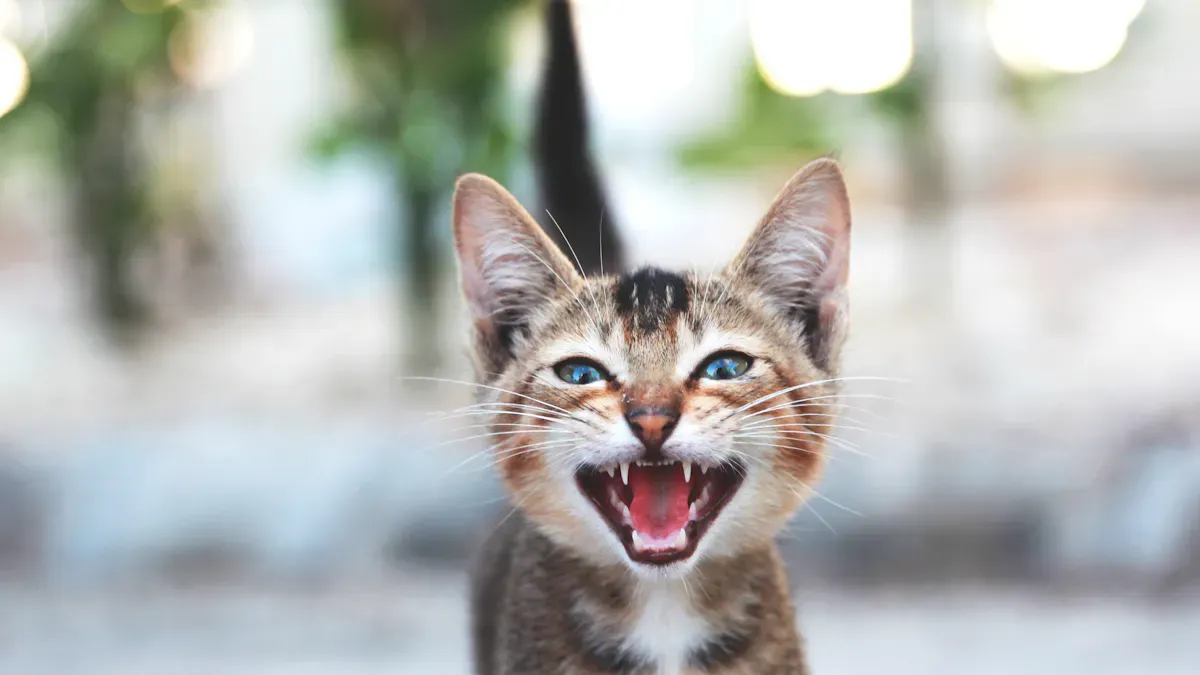
Have you ever wondered what your cat is trying to tell you with its meows? Understanding cat meowing sounds can significantly improve your communication with your feline friend. Studies show that humans often interpret meows better from familiar cats, suggesting that you can learn to recognize their unique vocalizations. Each cat develops specific sounds for their needs, making it essential to pay attention. Remember, the tone of their meow can convey different messages, from a friendly greeting to a request for food or even dissatisfaction.
Key Takeaways
Greeting meows are short and high-pitched, showing your cat is happy to see you. Pay attention to these joyful sounds as they express excitement.
Requesting meows are specific calls for attention, food, or play. If your cat’s meows get louder or longer, they need you to respond quickly.
Dissatisfaction meows are low-pitched and drawn-out, indicating your cat feels neglected or has unmet needs. Check if they are hungry or uncomfortable.
Purring usually means your cat is content, but solicitation purrs can signal urgency for attention or food. Recognize the context to respond appropriately.
Understanding your cat’s body language, like tail position and ear orientation, enhances communication. Observe these cues to better meet their needs.
Cat Meowing Types
Greeting Meows
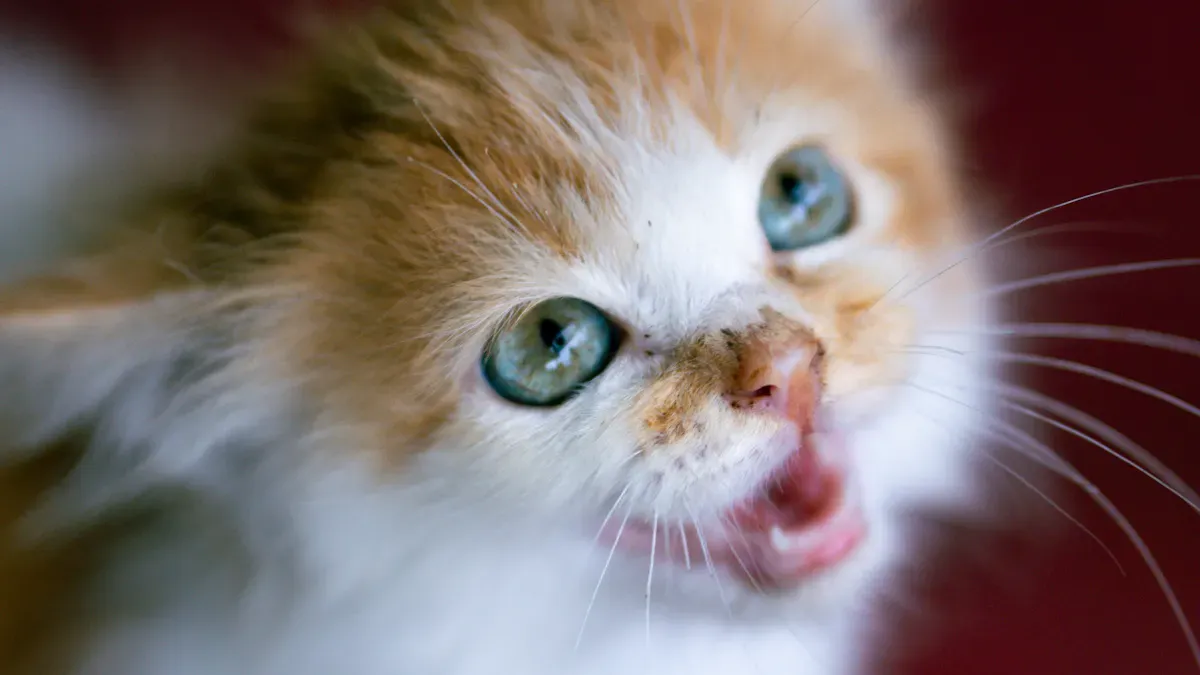
When your cat greets you with a cheerful meow, it’s like they’re saying, “Hey there!” These greeting meows are usually short, sweet, and high-pitched. They express happiness and excitement, especially when you come home after a long day.
Tip: Pay attention to the context! A brief, high-pitched meow often indicates your cat is thrilled to see you. It’s their way of saying hello, much like a friendly wave.
Type of Meow | Description |
|---|---|
Greeting Meow | A short, sweet, high-pitched meow indicating happiness. |
Context | Used as a friendly greeting, akin to saying ‘hello’. |
Requesting Meows
Requesting meows are a bit different. These sounds are tailored to get your attention. When your cat wants something—like food, playtime, or a cuddle—they’ll use specific meows to communicate their needs.
Cats have learned that meowing gets a reaction from humans. They don’t typically meow at other cats, so this vocalization is a unique way for them to express their desires.
You might notice that these meows can escalate in length and pitch if you ignore them. This is their way of saying, “I really need you to pay attention to me!”
Common situations that trigger these meows include:
Asking for food or treats 🍽️
Requesting attention or playtime 🎾
Seeking comfort or companionship 🐾
Dissatisfaction Meows
Now, let’s talk about dissatisfaction meows. These sounds can be quite telling. A long, drawn-out meow often indicates that your cat is feeling neglected or has a specific need that isn’t being met.
Low-pitched meows usually signal dissatisfaction. If your cat is meowing like this, it might be time to check if they’re hungry, bored, or even feeling unwell.
Common triggers for these meows include:
Hunger or attention-seeking
Medical issues or pain
Stress or anxiety due to changes in their environment
Understanding these different types of meows can help you respond appropriately to your cat’s needs. By paying attention to their vocalizations, you can strengthen your bond and ensure they feel heard and cared for.
Other Cat Vocalizations
Purring Sounds
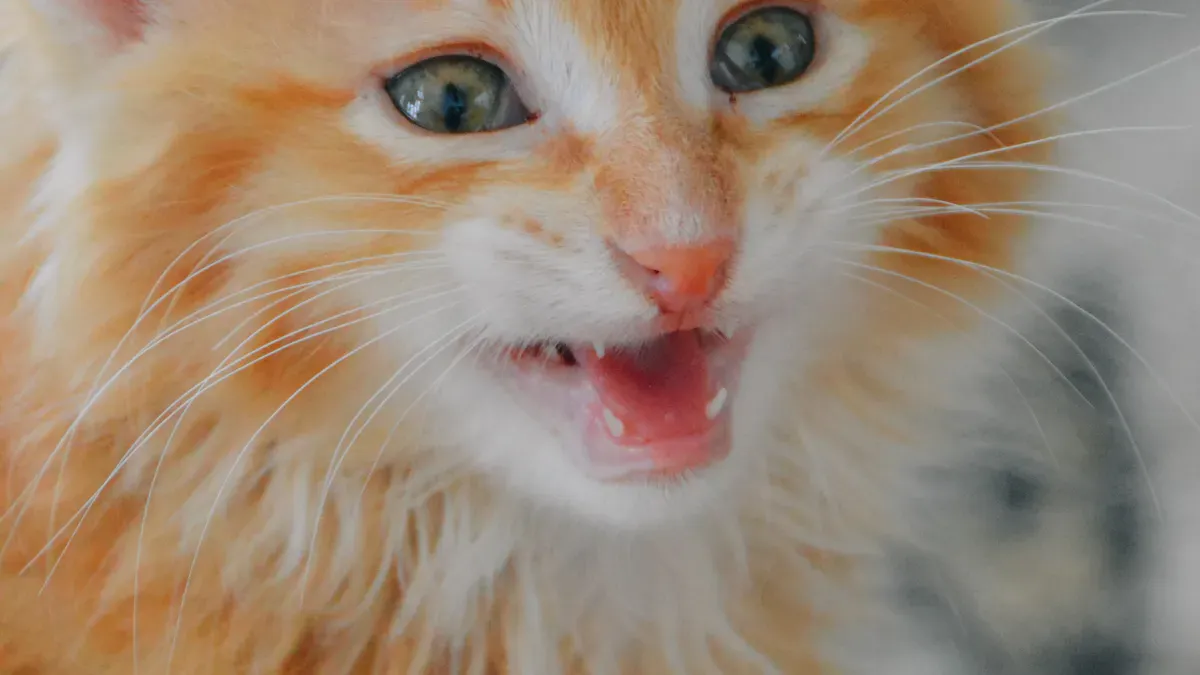
When you hear your cat purring, it often means they’re feeling content and relaxed. This soothing sound usually occurs when your cat is being petted or cuddled. But did you know that purring serves more than just a comfort signal? Cats also use a special type of purring called “solicitation purrs.” These sounds combine low-pitched purring with a high-pitched component that resembles a cry. This unique structure helps cats convey urgency, especially when they want food or attention.
Here are some key points about cat purring:
Cats purr to express comfort and request attention.
Purring influences human responses, particularly in food-seeking situations.
This communication strengthens the bond between you and your feline friend.
Purring can also occur in various contexts, such as:
Context | Description |
|---|---|
Relaxed Situations | Purring often happens during petting or close contact, indicating comfort. |
Communication Between Mother and Kittens | Kittens purr shortly after birth, highlighting its role in social bonding. |
Identity Signal | Purrs help both cats and humans recognize familiar individuals. |
The sound of purring is produced through rapid muscle contractions in the throat. When air passes through the larynx, it creates that distinctive rumbling sound. This process can happen during both inhalation and exhalation, making it a continuous sound that can last from a fraction of a second to several minutes.
Hissing and Yowling
On the other hand, hissing and yowling are vocalizations that indicate your cat is feeling threatened or distressed. A cat hiss is a low, drawn-out sound that resembles a snake’s hiss. It serves as a warning, often accompanied by defensive body language, such as an arched back and pinned-back ears.
Here’s what you should know about these sounds:
Hissing: Indicates that your cat feels scared or irritated. It’s a defensive mechanism meant to ward off perceived threats.
Yowling or Howling: This long, low-pitched sound often signifies distress, territorial disputes, or mating calls. Understanding the context is crucial to determine if your cat is seeking attention or expressing discomfort.
Common situations that trigger these vocalizations include:
Encountering unfamiliar animals or people
Feeling unwell or in pain
Expressing frustration or anxiety due to changes in their environment
Recognizing these vocalizations can help you respond appropriately to your cat’s needs, ensuring they feel safe and secure in their surroundings.
Understanding Cat Body Language
Cats communicate not just through meows but also through their body language. Understanding these signals can help you interpret your cat’s feelings and intentions. Let’s dive into two key aspects: posture and tail position, as well as ear orientation.
Posture and Tail Position
Your cat’s posture and tail position reveal a lot about their mood. Here’s a quick guide to help you understand what those positions mean:
Tail Position | Mood Indicator |
|---|---|
Tail Straight Up | Indicates social confidence and a friendly approach. |
Tail Question Mark | Signifies happiness and an invitation to interact. |
Tail Held Low | Indicates fear or anxiety. |
Tail Puffed Up | A defensive reaction indicating the cat feels threatened. |
Tail Wrapped Around Body | Can indicate fear, defensiveness, or discomfort. |
When you see a cat with an upright tail, it often means they’re feeling confident and ready to engage. A tail held low, on the other hand, suggests your cat might be feeling scared or uncertain. Remember, context matters!
A study from the University of Southampton found that cats are more likely to approach a silhouette with a raised tail, showing that this position is a reliable sign of a cat’s willingness to interact.
Ear Orientation
Your cat’s ears also provide valuable insights into their emotional state. Here’s what to look for:
Ear Position | Emotional State/Attention Level |
|---|---|
Ears facing forward | Indicates curiosity and attentiveness; the cat is engaged with its surroundings and may be playful or relaxed. |
Ears flattened against head | Signifies fear or nervousness; the cat is uncomfortable and may need space. |
Ears pointing sideways | Suggests anxiety or uncertainty; a warning sign that the cat might lash out or retreat. |
When your cat’s ears are forward, they’re likely curious and ready to play. Flattened ears indicate discomfort or fear, while sideways ears can signal that your cat is feeling anxious.
By observing these body language cues, you can better understand your cat’s needs and feelings. Remember, cats use body language alongside vocalizations to communicate effectively.
Understanding your cat’s meows and body language can truly enhance your relationship. Remember, each sound carries a unique message, whether it’s a cheerful greeting or a request for attention.
Tip: Keep an eye on your cat’s posture and tail position, as these cues complement their vocalizations.
Consider maintaining a journal to track your cat’s meows and their meanings. This practice can help you respond better to their needs.
Here are some strategies to improve your understanding:
Observe their body language to prevent issues.
Provide toys and activities to keep them engaged.
Use positive reinforcement to encourage good behavior.
By paying attention to both vocalizations and body language, you can create a stronger bond with your feline friend.
FAQ
What does it mean when my cat purrs?
When your cat purrs, it usually indicates contentment. A cat purr can also signal a request for attention or comfort. Pay attention to the context; if your cat is relaxed, it’s likely happy.
Why does my cat meow excessively?
Excessive meowing can indicate that your cat is seeking attention, feeling anxious, or trying to communicate a need. If this behavior is new, check for any changes in their environment or routine.
How can I decode cat noises?
To decode cat noises, listen closely to the tone and context. Different meows, like greeting or requesting meows, convey specific messages. Observing your cat’s body language can also help you understand their feelings.
Is there a difference between a meow and a yowl?
Yes, a meow is usually a short sound for communication, while a yowl is longer and often indicates distress or a strong emotion. Yowling can signal territorial disputes or mating calls.
Can all cats purr?
Most cats can purr, but not all do it the same way. Some cats have a softer purr, while others have a louder one. Purring serves various purposes, including comfort and communication.